A Compilation of Educational Inquiry and Reflection

Category: Literacy Blog Posts

Blog Post #1 The One Book That Changes Everything

Blog Post 1

  1. Describe your ‘one book’ that changed everything for you as a reader.
https://rarestkindofbest.com/2012/01/14/why-i-dont-hate-the-rainbow-fairies/

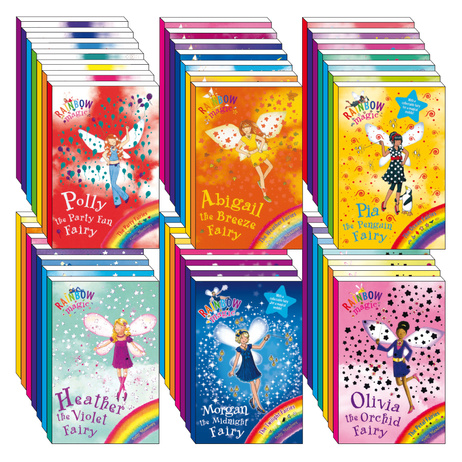
For me, my one book that changed everything was one of the novels from the Rainbow Fairy Series. I don’t remember which one, because I ended up reading a lot of them, but I remember completing the first one I read and being so excited that I had read an entire chapter book in one day. These books eventually played a large role in my life as I began to make it my entire personality. I would constantly be on the lookout for fairies and make little fairy houses around my room and yard. Recently, I saw this video – The Fairy Scientist – and it reminded me of this book and the never-ending magic I experienced in my childhood.

  1. How do you feel about reading? Tell me about it.

Reading has always been something I fall in and out of. Throughout my elementary and middle school years, I read a bunch. In high school, other things started to take precedence, and by university, it seemed almost impossible to prioritize “reading for fun”. Recently, I have found some new books that have sparked my interest, and I have fallen back in love with reading again.

  1. What types of books do you like to read?

Paperback. I HATE eBooks! There’s something about the smell and feel of a real-life book in your hands that will just never compare to anything else. I’ve tried with eBooks and audiobooks because I know it would probably allow me to “read” much more with my lack of time and tight budget, but it’s just not the same. In terms of genre, I love a good fantasy book. A close second would probably be horror and dystopian novels. Recently, Margaret Atwood stole my heart, and I am almost done with the MaddAddam series. Any book where the author gets the descriptions just right, where I can almost taste, smell, hear and see everything they describe.

https://www.barbican.org.uk/whats-on/2025/event/an-evening-with-margaret-atwood
  1. List some hobbies and things you like to do outside of school.

Outside of school, I enjoy spending time in the outdoors in as many formats as possible, especially with my puppy (okay, she’s actually a 2-year-old dog, but she’s still MY puppy). I’ve recently challenged myself to get better at cooking, and it’s been going quite well. Coming from a family of hunters, I typically cook with game meat, and try to source (most) of my ingredients locally. Also, in the last 2 years, I’ve become really invested in rugby. I found a great team with a lovely group of strong, supportive, energetic, women and I am excited to begin playing for my 3rd year April.

  1. Who are your favourite authors?

I don’t typically pick a book for its author; however, as previously mentioned, I have found a particular liking for Margaret Atwood. I also love Lisa Lister for her lifestyle books.

  1. Tell me a bit about the last book you read that you really enjoyed.

The Year of the Flood – Margaret Atwood. I enjoyed it for the sensational descriptions Atwood provides. Every word leaves the reader with a clear image of the character’s experiences. I also enjoyed the style it was written in (shifting perspectives). A few of my favourite lines:

A bit of a funny story about this book: I had a copy that got left on the dashboard of my car for a bit too long, so the glue softened on the spine, and all the pages started to fall out. While I was in Vancouver, I wanted to pick up another copy. I didn’t have long before my plane left, so I ordered the book for pick up while in the Uber to the bookstore. When I arrived, the cashier couldn’t find my order. I showed him my receipt, so he told me to just grab a copy and take it. Once I got back in the Uber, I received an email
 “We are sorry, but your order has been cancelled due to an error in the payment process”. At this point, I was already zipping down the freeway to the airport. Me and my newly ACCIDENTALLY shoplifted book.

  1. Tell me a bit about what you have been doing since last semester during your winter break. How have you been spending your time?

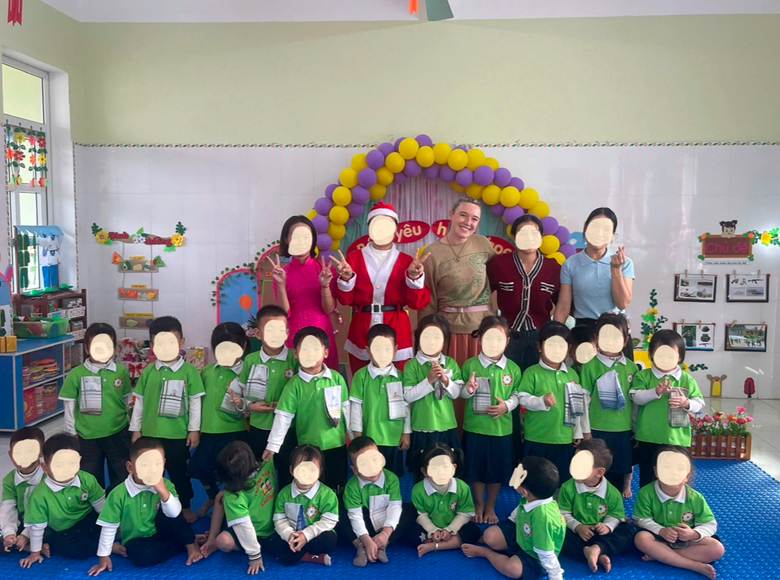
Over the winter break I had the incredible experience of going to Vietnam. I had many wonderful experiences there, but possibly one of the most fulfilling was getting the opportunity to observe a classroom in an elementary school in Phong Nha Valley. I hope to return to the country one day. Perhaps I will return as a real teacher and maybe even get the opportunity to teach there.
  1. What subjects or topics do you like learning about?

So far, I have enjoyed all the subjects (even math!). I particularly enjoy when the subjects are taught through a holistic, whole-child approach. After learning about it in year 2, I found myself drawn to SEL. I enjoy the idea of teaching kids to regulate and manage their emotions before pushing them to learn the challenging academic topics.

  1. If you could read a book about one thing, what would that be?

Maybe on odd, interesting look at this question, but I would be really interested to read my own biography as a ghost. I believe that understanding how I was depicted through others’ eyes would be a humbling yet fulfilling experience.
Blog Post #5 Diversity in the Classroom Library

As we know, our classrooms are filled with students from diverse backgrounds (Bright, 2021). As multiculturalism, SOGI, and anti-racist practices become the forefront of our teaching careers, the literature we choose to fill our classrooms plays a big part in how our students feel welcome and included. In previous blog posts, I have explored Jo Chrona’s words and her question, “If Not Here, Then Where?” (Chrona, 2022) This question forced me to reflect on an uncomfortable truth about reconciliation in Canada. If reconciliation and meaningful change in education aren’t happening in our classrooms, then they aren’t happening anywhere. This reflection made me realize just how important it is to have indigenous literature in your classroom, and not just a few books, but a large majority of your classroom library. Here is a summary of books I would include in my diverse classroom library and how I would do so respectfully and ethically.

Indigenous Books (Ktunaxa)

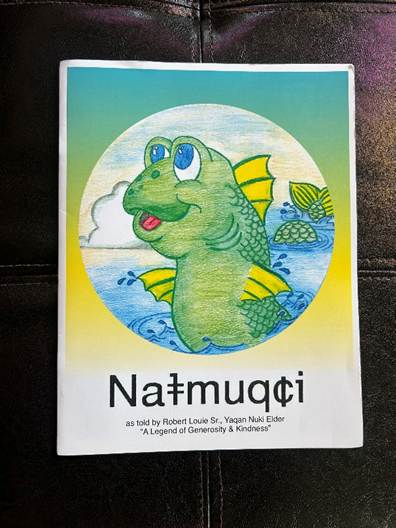
NaⱥmuqÈŒi – Traditional – Told by Robert Louie Sr.

This simple picture book is a great way to introduce oral storytelling to students in Grades K-4. It teaches about the Yaqan Nuki (Lower Kootenay) legend of the water creature NaⱥmuqÈŒi and his love, kindness, and generosity, which allowed him to persevere despite the other animals’ jealousy and complete his task of preparing the land for the special creature coming soon – people. Important discussions when sharing this book with your class could be introducing the idea of oral stories and how this story may be told slightly differently depending on who’s telling it.

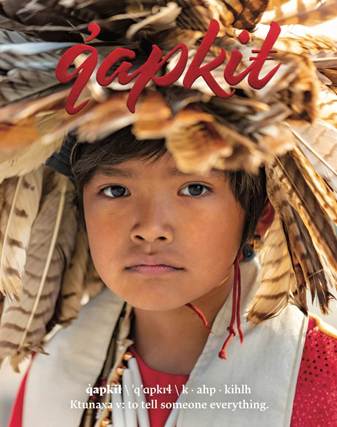
q̓apkiǂ – Ktunaxa Nation Council

q̓apkiǂ is a Ktunaxa word meaning to tell someone everything. This book celebrates the Ktunaxa people by highlighting culture, stories, history, and photos of the 12000-year-old nation that still inhabits the southeast corner of BC, as well as parts of Alberta and Montana. This book is a great introduction for students to get curious about the people who lived here for centuries before us.

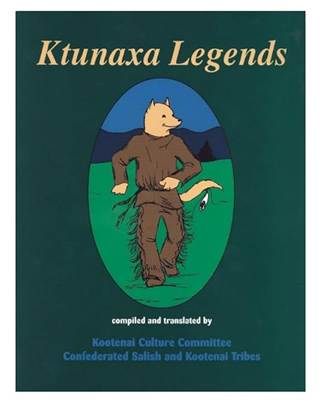
Ktunaxa Legends – Traditional – Kootenai Culture Committee

This collection of traditional legends teaches important lessons on being a good human through the lens of animal creatures. Most of these stories are suitable for all learners, but some content may be sensitive for younger readers and should be approached with caution.

Indigenous Books (Canada and Other)

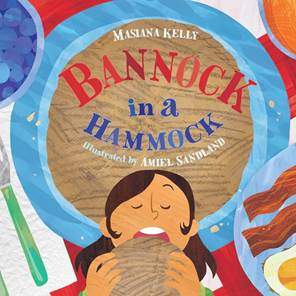
Bannock in a Hammock – Masiana Kelly

This cute little rhyming book is perfect for grades K-3. It teaches of a favourite Inuit treat – Bannock – and the many ways it can be enjoyed. The book even comes with a Bannock recipe, for a cross-curricular connection to math (simple fractions).

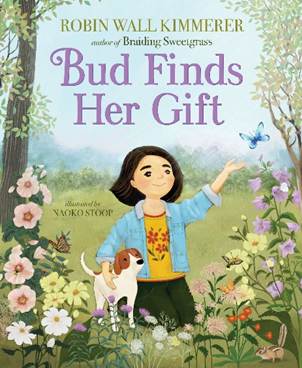
Bud Finds Her Gift – Robin Wall Kimmer

This book follows the story of Bud, who sees many people bustling around doing “important things,” and she wonders what her important thing is. Nokomis, her grandmother, explains that everything has an important gift. They explore the natural world and all the things it provides. Bud finally realizes her gift is to be still, to notice, and to observe. Perfect for all Elementary learners, and a great way to connect ELA to the Science curriculum through highlighting the importance of observation.

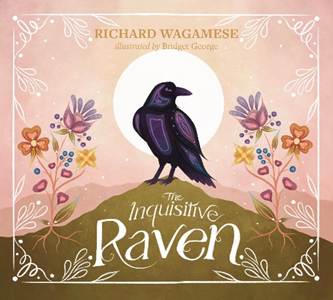
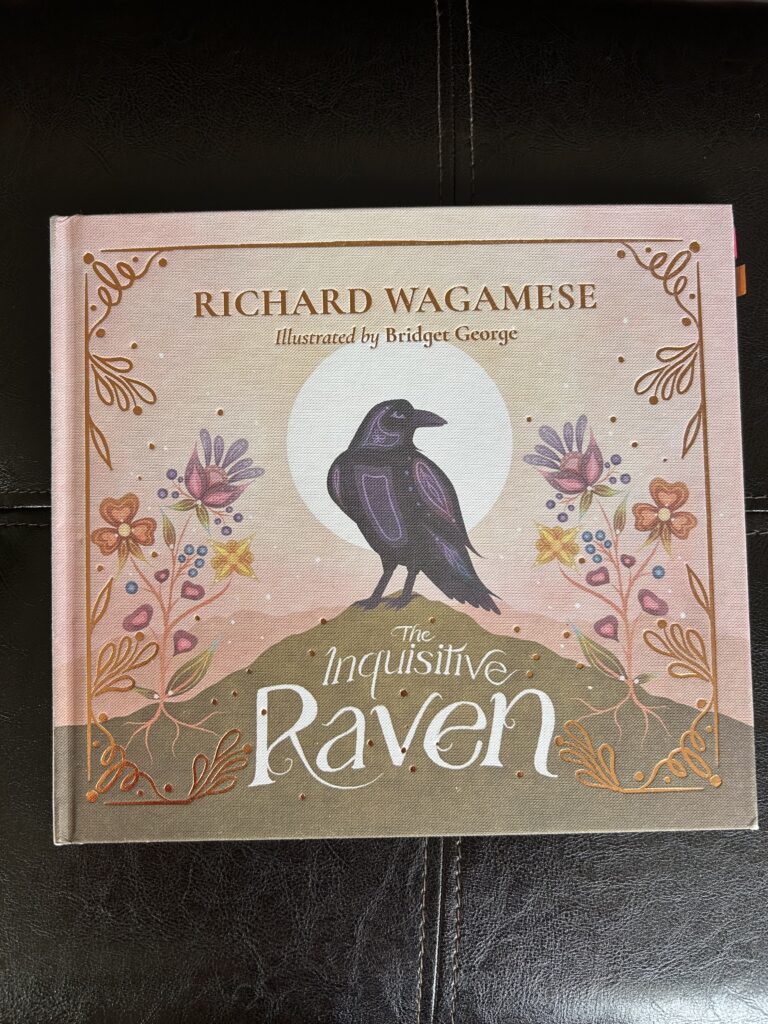
The Inquisitive Raven – Richard Wagamese

I couldn’t go without recommending this book by Richard Wagamese, as it’s already made an appearance in one of my previous blog posts. Similar to Wall-Kimmer’s book about gifts, this book explores the story of Raven as he learns what his gift is that makes him special. For a 3-session lesson plan idea, check out this Google Docs!

BIPOC books

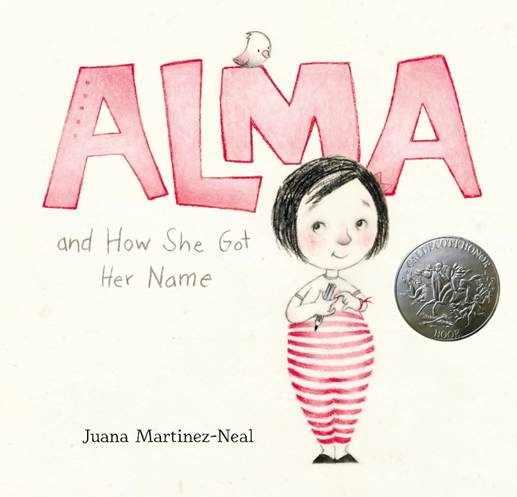
Alma and How She Got Her Name –  Juana Matinez-Neal

This book dives into the story of a girl named Alma, Alma Sofia Esperanza José Pura Candela, who feels as though she has too many names. When Alma asks her father, he tells her about all the important people in her life who led to her having so many names. This story invites students to explore their own family history and how they got their name. Check out this lesson plan from Surrey Schools One for more lesson plan ideas!

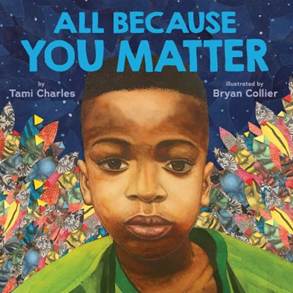
All Because You Matter – Tami Charles

This heartwarming story is for all kids, reminding them that they are important in this world. It tells the story of kids of colour and addresses some of the struggles they may face, but also just how important every single kid is. This book is extremely accessible. Here is a link to a YouTube read-aloud so you can share this book with your class, even on a tight budget.

SOGI Books

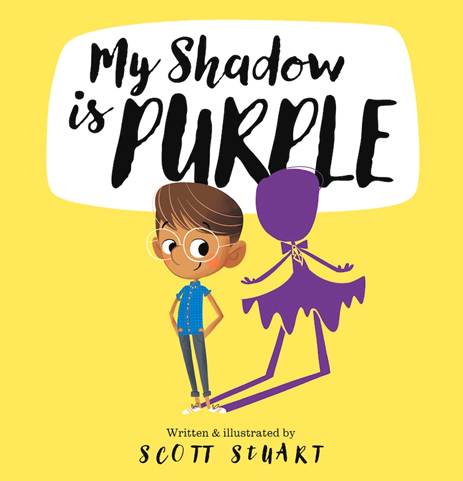
My Shadow is Purple – Scott Stuart

True story about this book: On my practicum, the EA in our class took out this book at lunch time and began reading it to the class. For the rest of the day, the students in our kindergarten class announced prouder than ever, “My shadow is blue!” “My shadow is Yellow!” “My shadow is Purple!” I’m not sure they knew exactly what it meant, but seeing the joy and pride they had in themselves was truly inspiring.

My Shadow is Purple is a story about a kid going through life experiencing the pressures of gender stereotypes and how being yourself is something to celebrate.

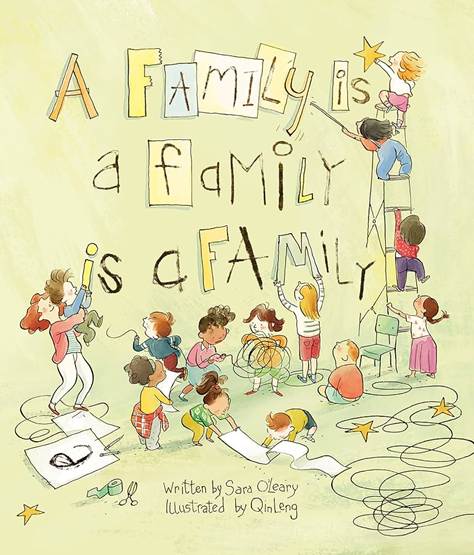
A Family is a Family is a Family – Sara O’Leary

This book opens the dialogue for discussing varied family structures. It explores how, no matter who loves you at home, you can still call them family, and that’s okay. This book is also very accessible, with plenty of read-alouds available. Here is my favourite!

Sources

Robin Bright. (2021). Sometimes Reading Is Hard. Pembroke Publishers. https://ebookcentral.proquest.com/lib/uvic/reader.action?docID=6823802&c=UERG&ppg=154#

https://luudisk.com/2022/04/25/if-not-here-then-where/

https://www.ktunaxa.org/where-to-buy/

https://www.goodminds.com/?gad_source=1&gad_campaignid=19694217482&gbraid=0AAAAAC8x4SjdmvFlA-MOiup6HiuqeXk8L&gclid=CjwKCAiAtq_NBhA_EiwA78nNWChC2ocDqdWjF6PsZIXJd63kKzucGMyeGrilHyW9pSMo8bU1mHlZlxoCqGEQAvD_BwE

https://books.google.ca/books/about/Ktunaxa_Legends.html?id=9IbYAAAAMAAJ&redir_esc=y

https://www.strongnations.com/store/12172/bud-finds-her-gift

https://www.strongnations.com/store/11967/the-inquisitive-raven

https://www.amazon.ca/Alma-How-She-Got-Name/dp/1536220434/ref=sr_1_1?dib=eyJ2IjoiMSJ9.J9moUnXeFsVu5klRm_6yJWUMXgmr9rslb7upuxF80j4TMRzC5fQDmF4vMSXStzeKwBWrP6TY8SuVWcgT2KQWNm12WsszdqV4MofF9dDUfek.RbrJqYLZaipdpTjGdp8VkrKb272Xjb7Yy3XcQRdLGAw&dib_tag=se&gad_source=1&hvadid=788534649318&hvdev=c&hvexpln=0&hvlocphy=9001454&hvnetw=g&hvocijid=11221508159465422655–&hvqmt=e&hvrand=11221508159465422655&hvtargid=kwd-405110308680&hydadcr=22464_13683001&keywords=alma+and+how+she+got+her+name&mcid=8aa11c57a8bb3b73ad8d0d39c4a241ca&qid=1772938858&sr=8-1

https://caledon.bibliocommons.com/v2/record/S192C3944000

https://www.indigo.ca/en-ca/my-shadow-is-purple/9781922503817.html

https://www.amazon.ca/Family-Sara-OLeary/dp/1554987946/ref=sr_1_1?dib=eyJ2IjoiMSJ9.zAVlk8vgQ4LkH2ilI6tAK1k1e02i6VcwGpgWVny1PWZ4tEylsqSKJBRErYqp9BOiw68DlB92TCHL5gGWGxEGtXT88PPxlrSvNFxY3tLFRzSZBh38wBMZpMoHUF51BndPWHCnO18-OCdTtIqdEfRWIhy0rzDpAX4v9C58NHgZ3p8_ZZCU5980YXeTVlk12gKFh4-E4GbtDvKNcMJSKdwhOSdyJr0VERJN-cHAXujG8eHhdU8bOfp5I-08hJ8g4lnCLtNXUS9fao4TW9F4ijqCc57NAHuMFhbkaAZ9eWDXpnQ.bzzfKcfTtKfp6eeXApjF6v01KOktMtE7amV4lkiy3MA&dib_tag=se&gad_source=1&hvadid=788667808982&hvdev=c&hvexpln=0&hvlocphy=9001454&hvnetw=g&hvocijid=11902160910893673205–&hvqmt=e&hvrand=11902160910893673205&hvtargid=kwd-307732336522&hydadcr=16515_13778668&keywords=a+family+is+a+family&mcid=4c2747d4ed6033089105507c8e9b475d&qid=1772943271&sr=8-1

Blog Post #4 Literacy Stations

Throughout this program, I have observed the “beginner’s mind” of many students, in which curiosity often drives the most meaningful learning experiences. When students are given a problem to solve or a mystery to uncover, reading and writing suddenly feel purposeful rather than procedural. With this idea in mind, I designed a literacy station for a Grade 2 class focused on phonics and WH words.

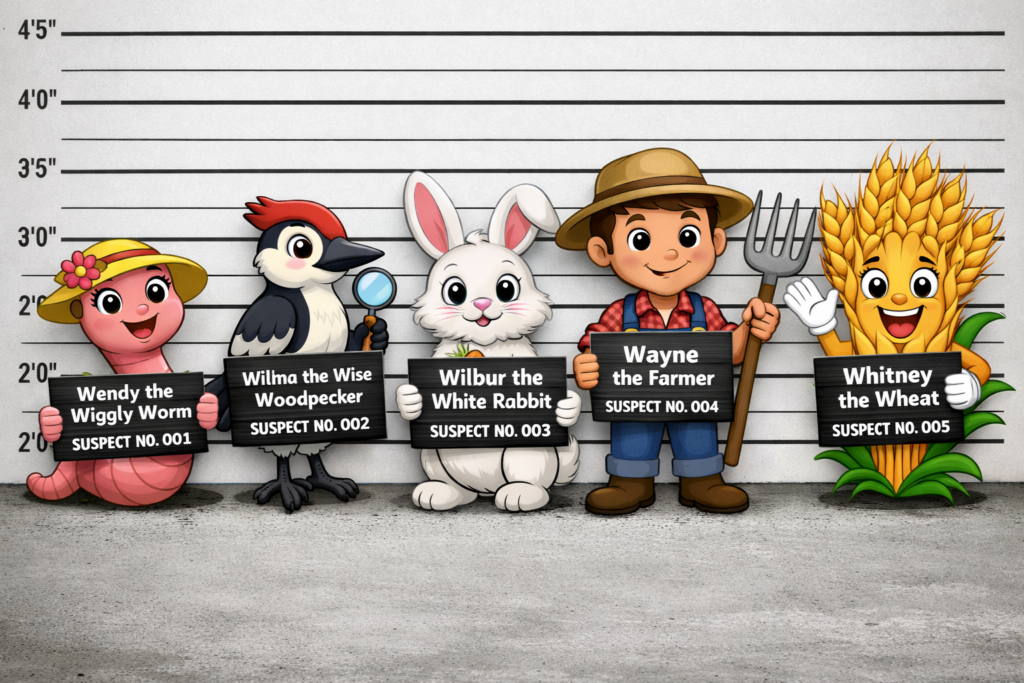
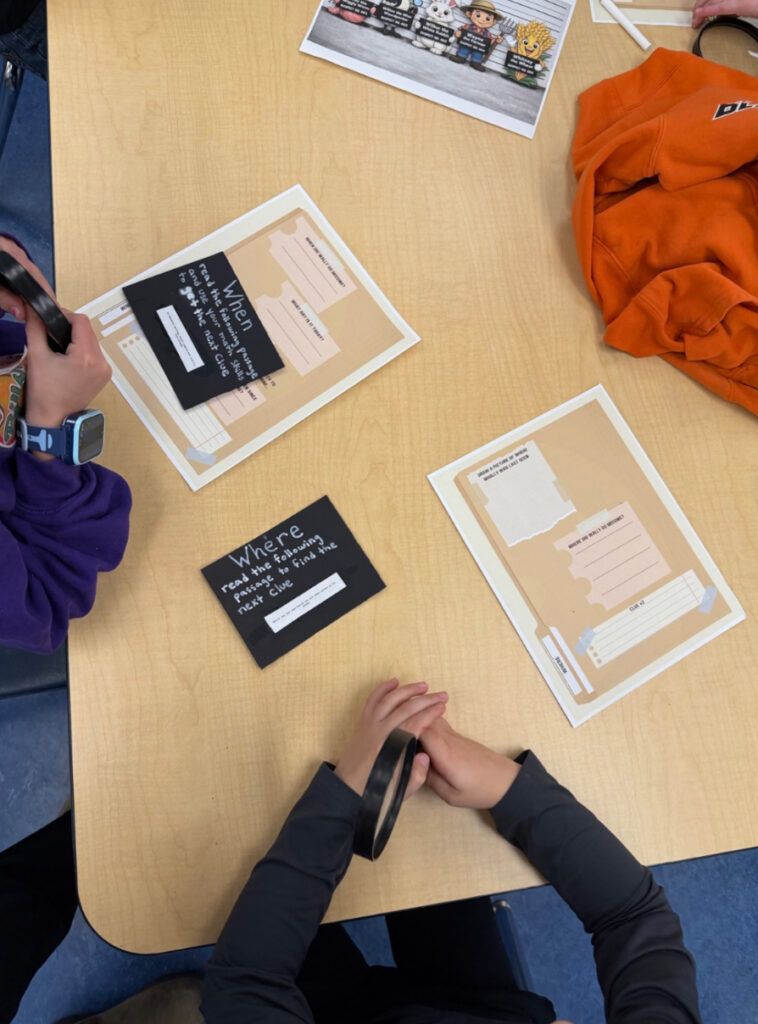
The final activity became a mystery about a missing worm named Whally, who had a wheat allergy. Students worked through a series of clues to determine what had happened to him. Each clue required them to read short passages of text and answer WH-questions to move forward in the mystery.

Check out the link for this lesson plan and Canva templates! https://docs.google.com/document/d/1H6lMj06cuaGa663KxaHwoML6jYbipDVG-a0nISvaBn8/edit?usp=sharing

The activity connected well with several Grade 2 English Language Arts competencies and content. Students used developmentally appropriate reading, listening, and viewing strategies, such as making predictions, asking questions, and engaging in conversations with peers as they tried to solve the mystery together. They also demonstrated reading strategies and processes, including using knowledge of language patterns and phonics to decode words, identifying familiar sight words, and monitoring meaning as they read the clues. The mystery format naturally encouraged collaboration, discussion, and my main focus, curiosity.

One inspiration for this station came from a moment during my read-aloud lesson (described in Blog Post 2). During that lesson, I asked students to write responses on very small pieces of paper simply because I had cut my index cards in half to save materials. One effect of this I didn’t initially notice that my teacher later pointed out was that the students were extremely eager to write on the tiny paper, likely because it felt new and different from the big 8×11 worksheets they are often handed.

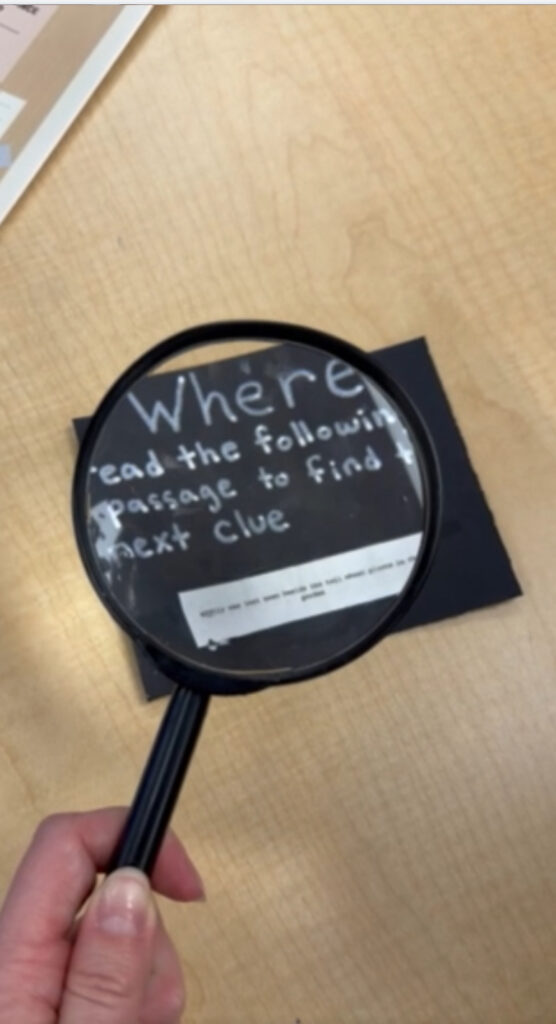
This observation made me wonder if adding a twist would also encourage higher reading engagement. To build on this idea, I created clues written in very small font and provided students with magnifying glasses to read them. This small adjustment proved very effective. Students were highly motivated to read the clues, and the classroom teacher commented on how much reading was taking place. I also noticed that most students required very little support with decoding the text as they were so eager to take ownership and figure it out for themselves.

Although the station was engaging, timing became a challenge. The literacy block included four stations, each intended to take about 10 minutes. My activity took much longer than expected, creating a bottleneck in the rotation and preventing one group from visiting the station.

Reflecting on this experience, I realize that the complexity of the activity did not match the available time. In the future, I would either simplify the task or redesign it to better fit the schedule. At the same time, I believe this activity would work very well as a whole-class lesson with a longer time frame of 20–30 minutes, allowing students to fully engage in solving the mystery. If given the opportunity, I would love to run this activity again with a whole class and more time.

One final moment of reflection came after the literacy stations. When I returned home that evening, I had left all of the materials and teacher notes for the activity on the table. My partner (who is not a teacher) and my Grade 1 daughter began working through the mystery of missing Whally together. Without any explanation from me, they were able to follow the instructions and complete the entire activity.

This unexpected moment provided meaningful feedback on the clarity of my lesson planning. Throughout the program, we have been encouraged to design lesson plans that another educator could easily pick up and teach. Seeing a non-educator successfully guide the activity reassured me that my instructions and planning were clear and detailed enough for not just a teacher, but anyone to follow.

Overall, this literacy station reinforced the importance of purposeful reading tasks, thoughtful planning, and flexibility when working within the time constraints of classroom routines.

Blog Post #3 VR and Wolves in the Wall

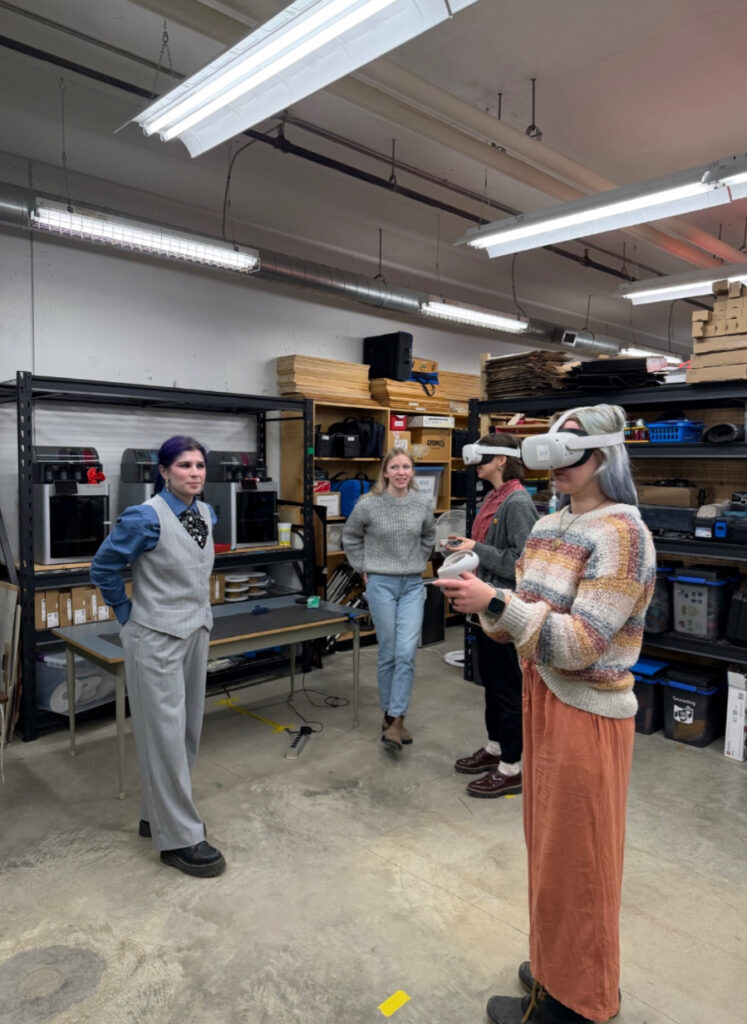
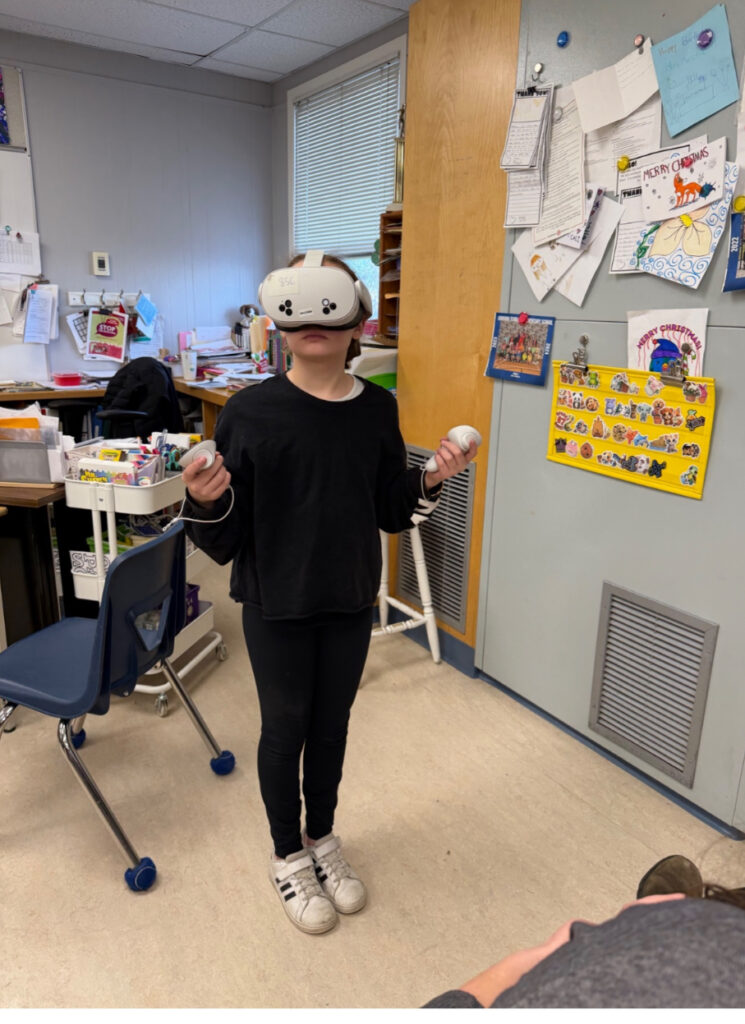
For this blog post, I would like to reflect on the VR experience my peers and I shared while working in an elementary classroom. I began my first experience with VRs at the design lab, and it was quite intimidating but also very fascinating.  We began with an Introduction to the story we would be working with, Wolves in the Walls by Neil Gaiman, and then learned our way around the VR headsets. My partner did not enjoy the VR experience, and so I was lucky enough to experience the full story. It was incredible how the VRs transported us to another world, much like a story does. However, this experience left me with many questions. How would students react to this experience? How is the rise in technology, such as VR, impacting children’s imagination? Does this enhance a student’s experience with literacy or perhaps inhibit it?

The next day, we tested out our new VR knowledge with the elementary students. We began by reading the book in different sections throughout various places in the school. Then, the students were given a work booklet to complete while they waited for their turn with the VR headsets. As I suspected, they were all very excited. It appears that students without headsets had a hard time focusing on the assigned work, and few booklets were completed. For the students using the headsets, it was almost sinister the way the VR nearly sedated them. The students appeared to be in a trance-like state, and I found it shockingly hard to grab their attention while they were using the VR.

At the end of this experience, I am not sure if I would use VR in my own classroom. In this activity, it seemed to have inhibited students from in-depth literacy learning rather than enhanced it. I’m not sure what English Language Arts curricular Big Idea this connects to, but it could be argued that it fits in with “Using language in creative and playful ways helps
us understand how language works.”
I do think VR could be useful in other scenarios, however, such as virtual field trips or virtual travel to another country for social studies. I am still not sure how the VR experience may have impacted the student’s imagination, as it was just one short experience. I am curious to do more research on this topic and see what I find.
Blog Post #2 Read-Aloud Reflection: The Inquisitive Raven

Using Stories to Explore Identity and Self-Growth

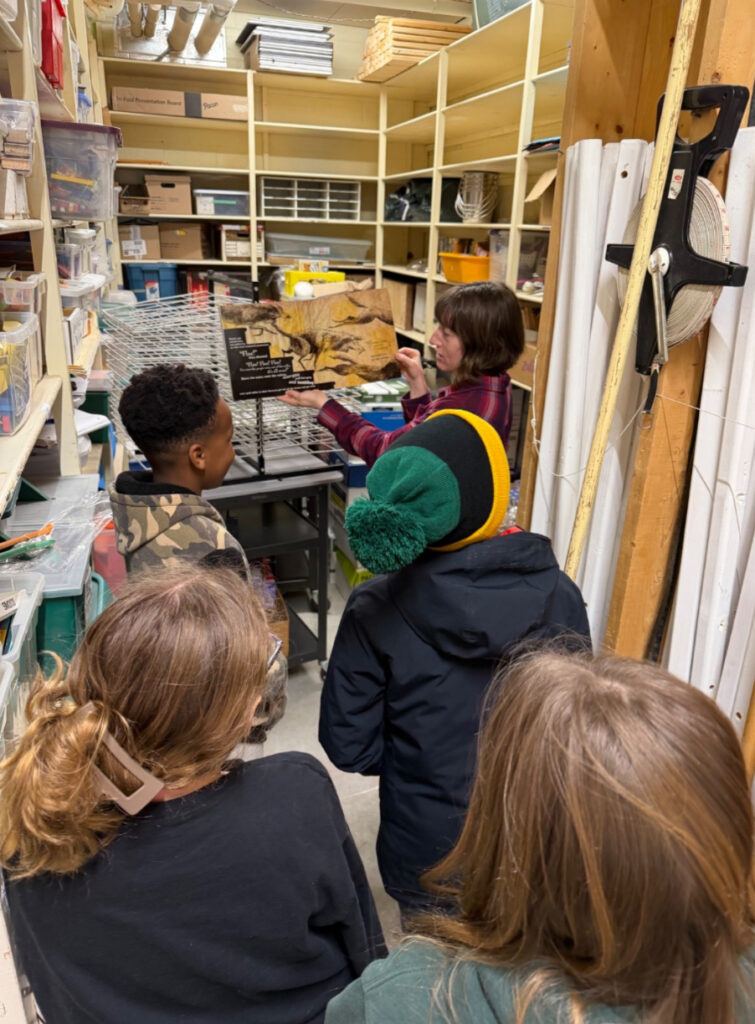
Over three sessions, my reading partner and I facilitated a read-aloud of The Inquisitive Raven by Richard Wagamese with a Grade 4/5 class. We intentionally divided the novel into three sections to maintain engagement and create space for conversation, reflection, and experiential learning. As we planned and implemented these sessions, several key themes emerged, including identity, mentorship, and what it means to grow into oneself.

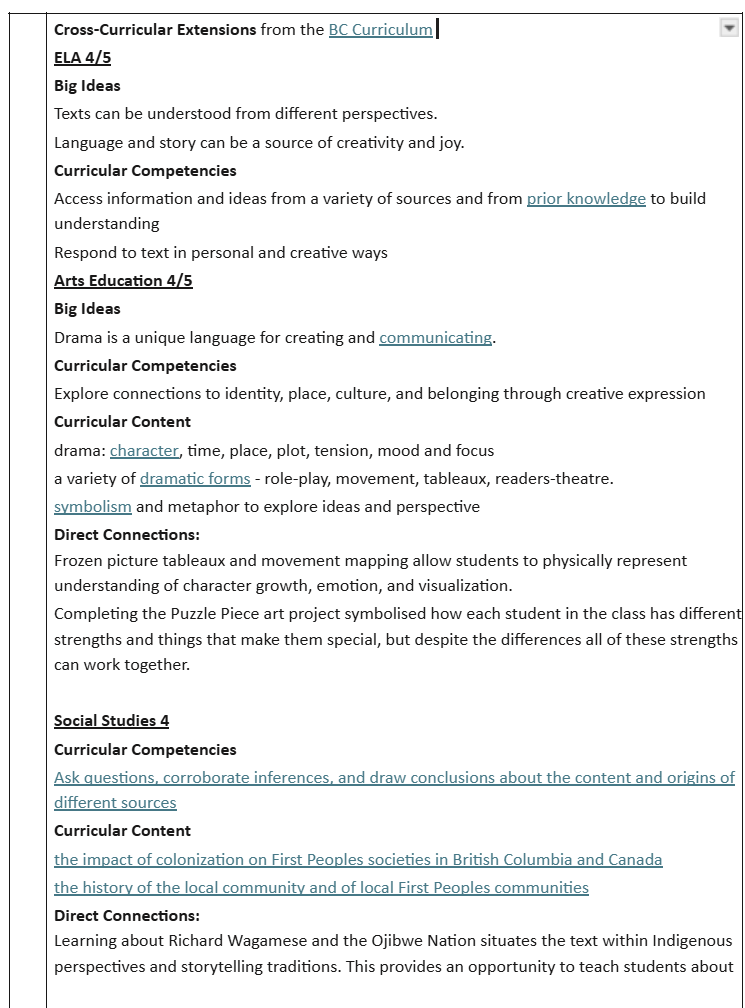
The BC English Language Arts Big Ideas for Grades 4 and 5 remind us that “Texts can be understood from different perspectives” and “Exploring stories helps us understand ourselves and make connections to others and to the world.” This experience brought those ideas to life. Students were not simply following Reuben’s journey but instead locating themselves within it. All the personal stories and connections that came out of this read aloud experience also emphasised the different perspectives, and wholesome connection that comes from stories.

BC Curriculum: https://curriculum.gov.bc.ca/

Intentional Planning Beyond “Story Time”

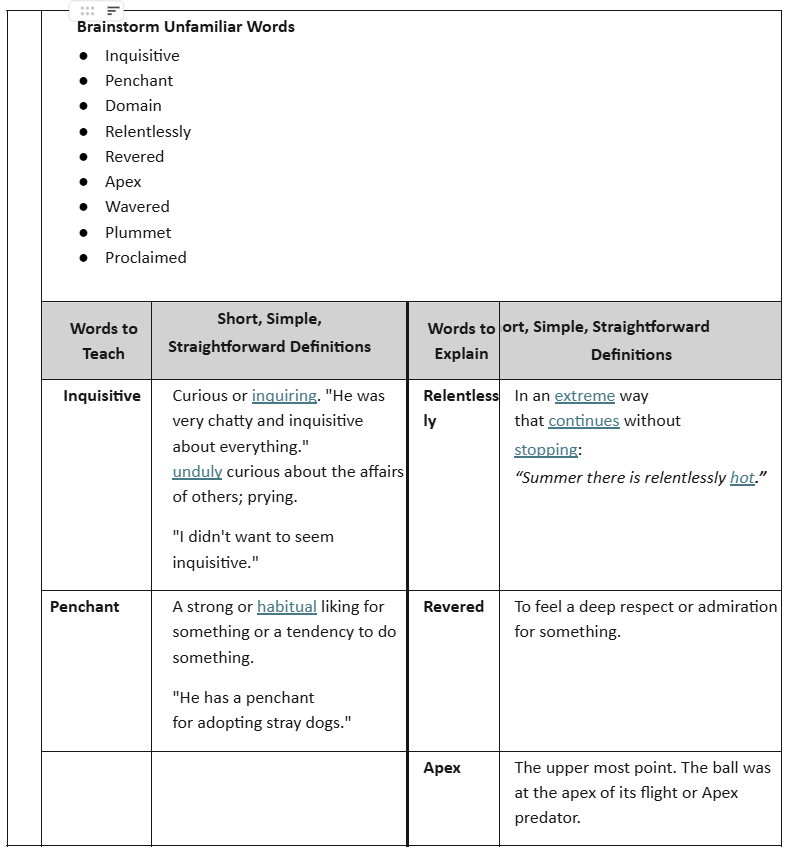
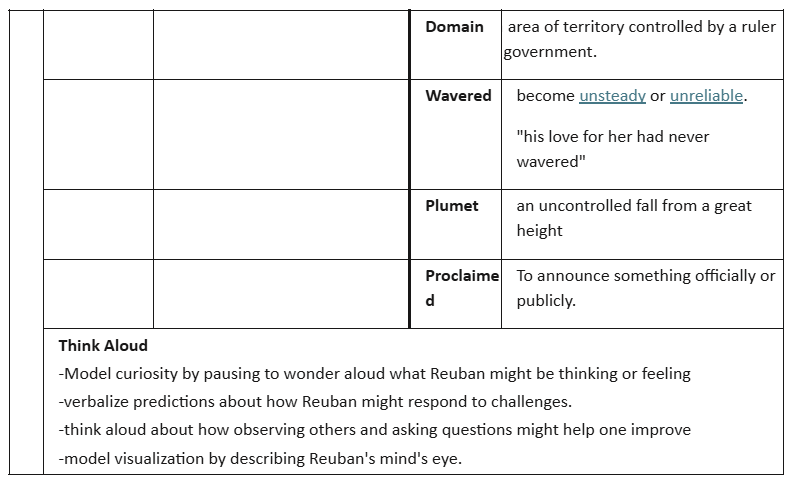
Using the Read Aloud Planning Template encouraged us to think carefully about background knowledge, vocabulary, symbolism, and potential challenges. Words such as inquisitive, apex, domain, and wavered were selected for explicit instruction. In Read Alouds for All Learners, Molly Ness cautions that one of the greatest mistakes educators make is insufficient planning (Ness 2024). Using Ness’s three-step framework helped ensure our sessions were purposeful and well structured.

The “Funds of Knowledge” section resonated most with me. Reuben’s curiosity, admiration for mentors, and experiences of self-doubt mirrored experiences many students navigate themselves. This shifted my thinking from asking, “How will students understand the story?” to “How might the story help students understand themselves?” This new connection helped shaped our learning goals and intentions for our students.

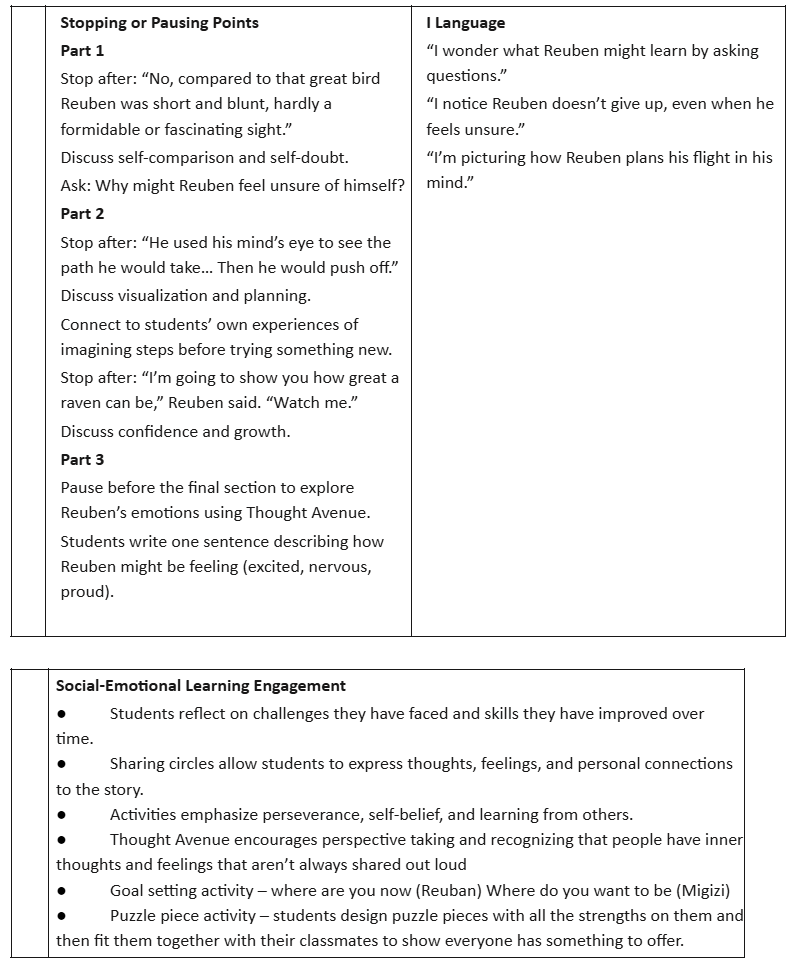
For the 3-session lesson plan and Read Aloud Template, check out This Google Docs!

Act I, II, III, and scene


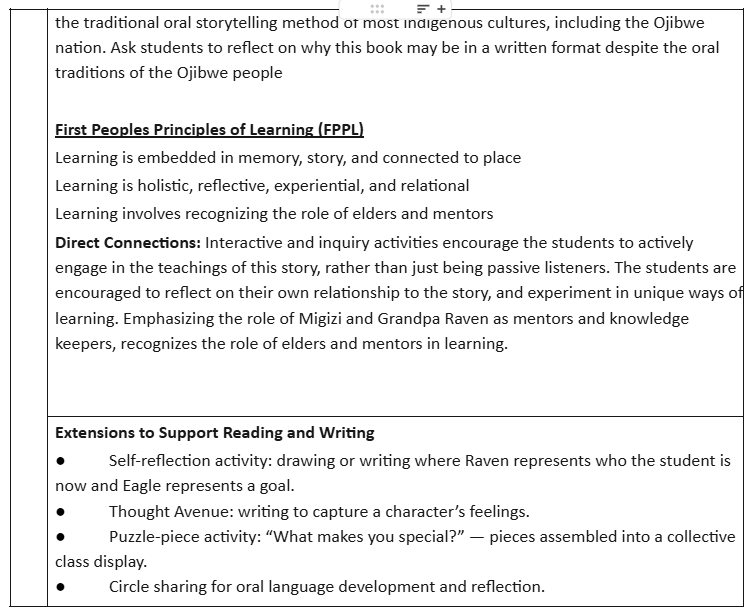
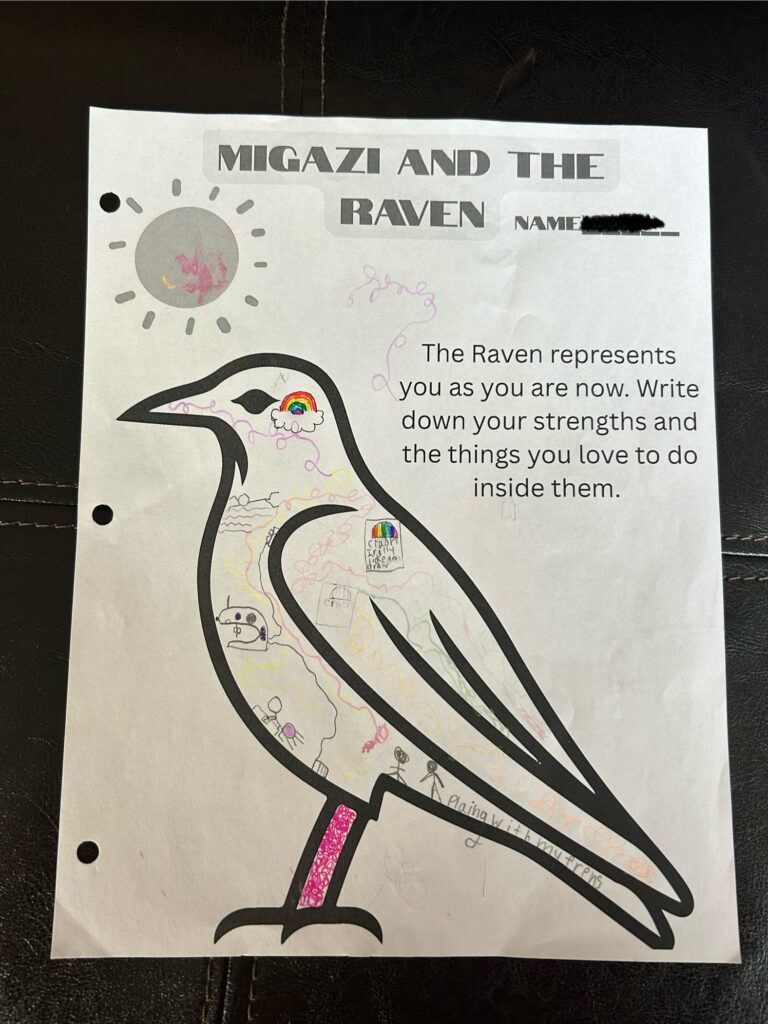
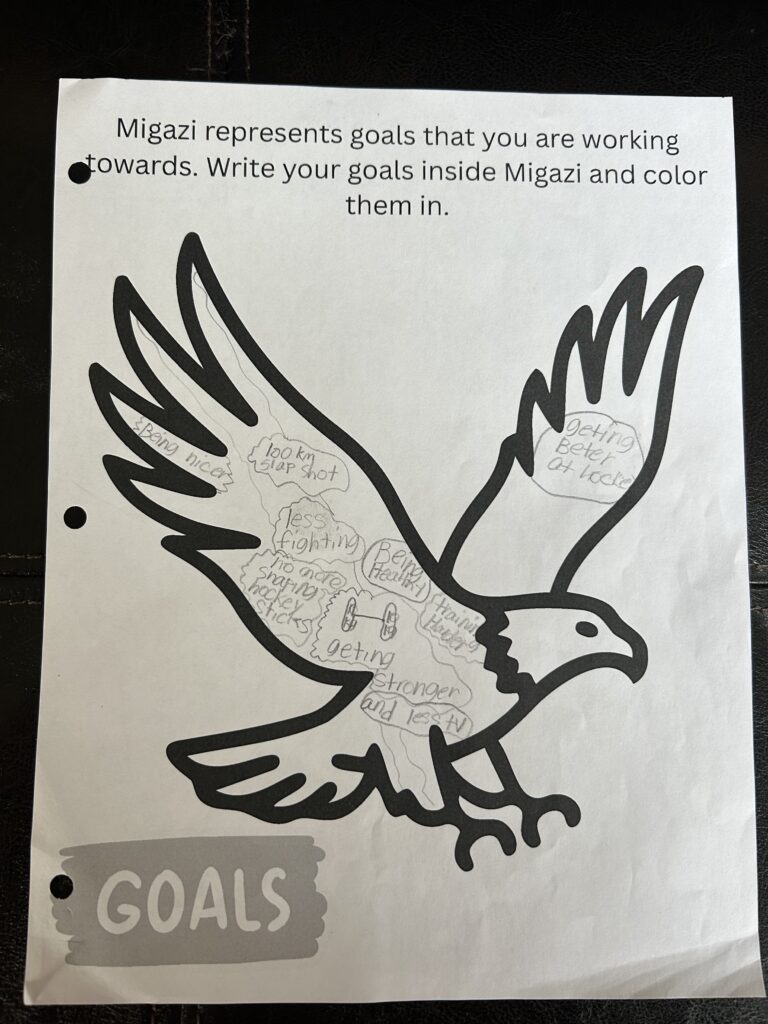
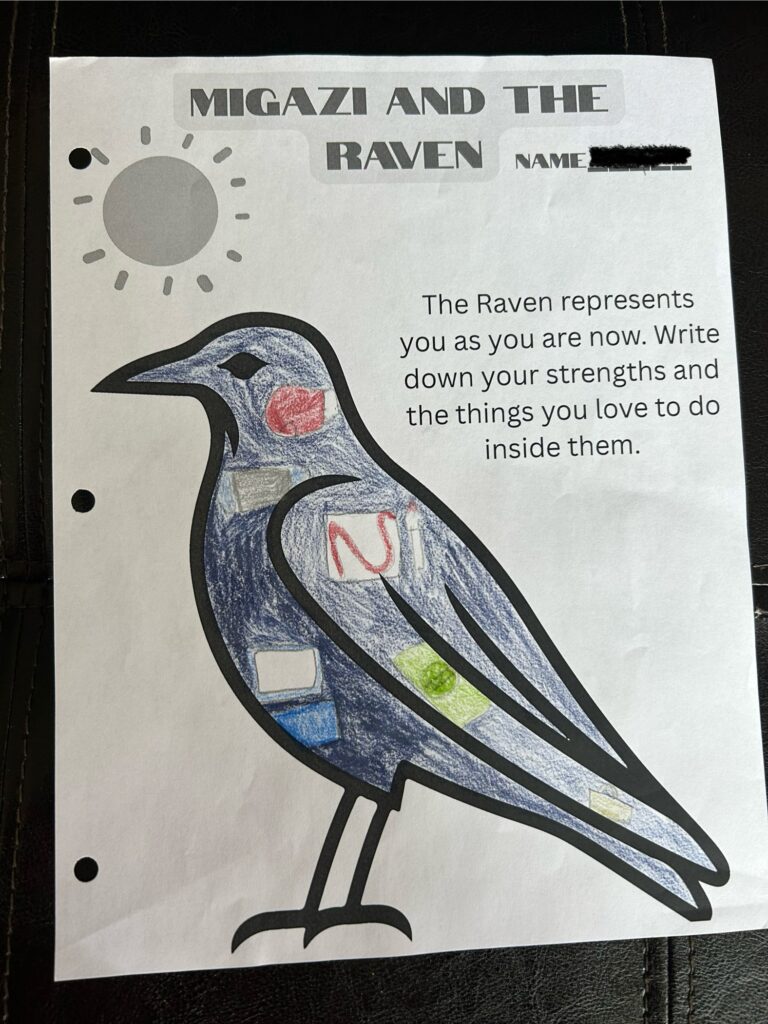
In Session One, students explored the meaning of “inquisitive” through think-pair-share and role-play questioning activities. They reflected on mentors in their own lives, connecting to Migizi and Grandpa Raven. Our main activity invited students to create a write-draw mind map, using Reuben to represent their current strengths and Migizi to represent their goals. I think offering flexible response helped keep the students engaged and eager to complete this task. We also included a sharing circle at the end for students to reflect on what the story helped them learn as well as our authentic way of acknowledging Indigenous pedagogy and the First Peoples Principles of Learning: learning is relational and embedded in story.

Session Two began with a questioning game to reconnect students to Reuben’s inquisitive nature. Movement mapping and frozen tableaux followed, allowing students to embody visualization and growth. The drama-based activities were particularly engaging and highlighted how differently students interpreted Reuben’s uncertainty and confidence.

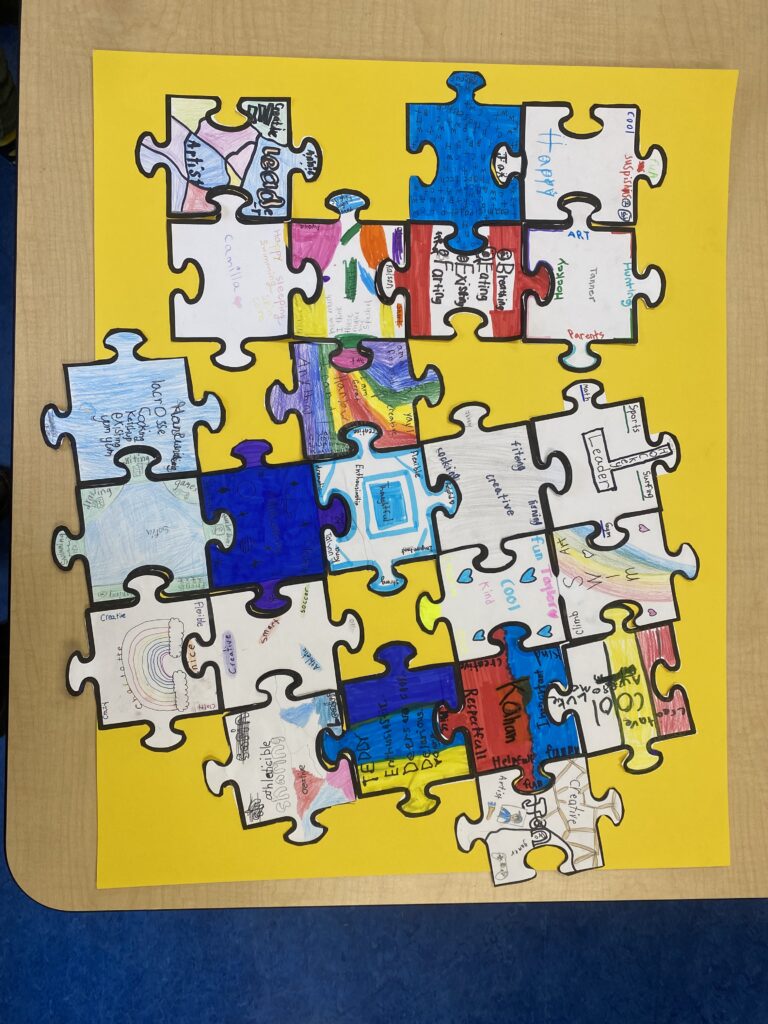
In Session Three, students wrote from Reuben’s perspective using “Thought Avenue.” Engagement was lower during this activity and this prompted me to reflect on whether additional modeling or structure was needed, or if the students weren’t as interested in this activity. Their teacher mentioned it was a weird day in the classroom, but I also wondered if this was a sign the students were becoming more comfortable with us and testing how far they could push. However, the energy returned during the final combo write/draw activity which went very well in the first session. In this activity I noticed a strong demonstration of the Big Idea “Exploring stories helps us understand ourselves and make connections to others and to the world”. Each student created an individual puzzle-piece to represent their strengths and classroom identity which were assembled into a collective classroom display representing each learner’s valuable contribution to their classroom community. This activity reinforced that despite our differences, we all have something valuable to offer to our class, community and the world.

Final Thoughts

This experience reminded me that read-alouds are not simply instructional routines; they are opportunities to intentionally design spaces where students see themselves reflected in text and in one another. The most meaningful moments were not tied to vocabulary or comprehension, but instead to the conversations, risks, and connections students made.

I was particularly aware of how engagement shifted depending on the format of response. Drama and collaborative art invited confidence and perspective-taking, while written reflection required more scaffolding. Moving forward, I would integrate clearer modeling and gradual release when transitioning to written tasks to ensure students feel as supported in these activities as possible.

Ultimately, this experience made me appreciate that, read-alouds can make stories become more than texts to analyze. They transform stories into invitation for students to reflect on who they are how they will grow into who they want to become.

Sources

Ness, M. (2024). Read alouds for all learners. Solution Tree Press. British Columbia Ministry of Education and Child Care. (n.d.). BC curriculum. https://curriculum.gov.bc.ca/