Using Stories to Explore Identity and Self-Growth
Over three sessions, my reading partner and I facilitated a read-aloud of The Inquisitive Raven by Richard Wagamese with a Grade 4/5 class. We intentionally divided the novel into three sections to maintain engagement and create space for conversation, reflection, and experiential learning. As we planned and implemented these sessions, several key themes emerged, including identity, mentorship, and what it means to grow into oneself.
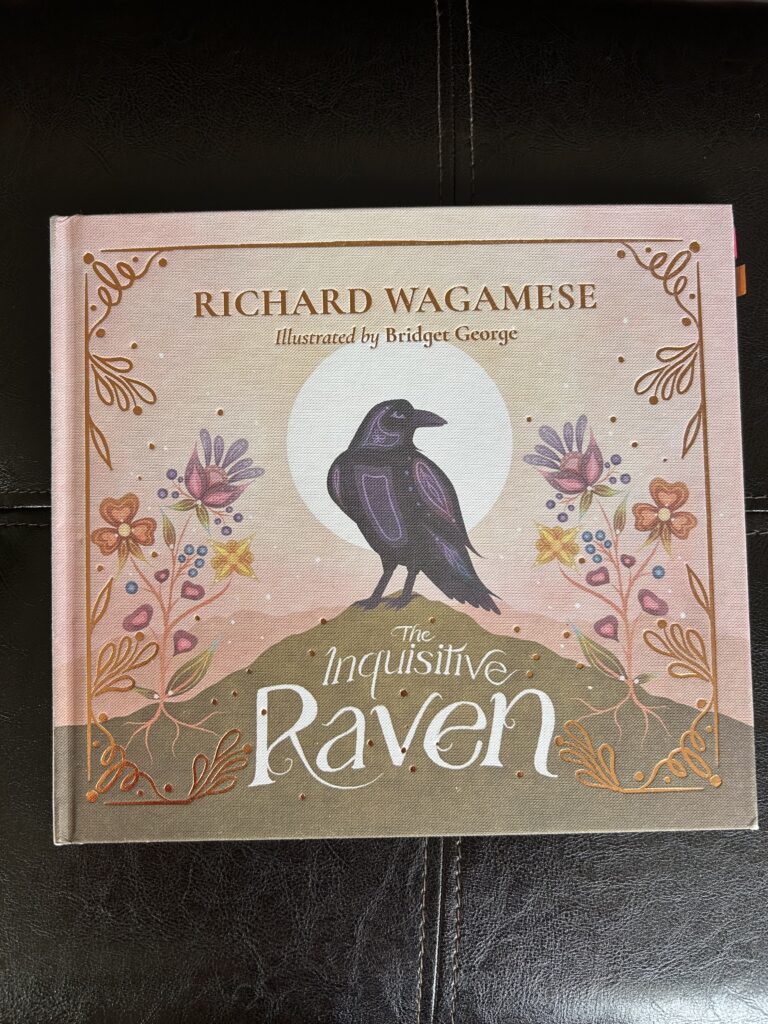
The BC English Language Arts Big Ideas for Grades 4 and 5 remind us that “Texts can be understood from different perspectives” and “Exploring stories helps us understand ourselves and make connections to others and to the world.” This experience brought those ideas to life. Students were not simply following Reuben’s journey but instead locating themselves within it. All the personal stories and connections that came out of this read aloud experience also emphasised the different perspectives, and wholesome connection that comes from stories.
BC Curriculum: https://curriculum.gov.bc.ca/

Intentional Planning Beyond “Story Time”
Using the Read Aloud Planning Template encouraged us to think carefully about background knowledge, vocabulary, symbolism, and potential challenges. Words such as inquisitive, apex, domain, and wavered were selected for explicit instruction. In Read Alouds for All Learners, Molly Ness cautions that one of the greatest mistakes educators make is insufficient planning (Ness 2024). Using Ness’s three-step framework helped ensure our sessions were purposeful and well structured.
The “Funds of Knowledge” section resonated most with me. Reuben’s curiosity, admiration for mentors, and experiences of self-doubt mirrored experiences many students navigate themselves. This shifted my thinking from asking, “How will students understand the story?” to “How might the story help students understand themselves?” This new connection helped shaped our learning goals and intentions for our students.
For the 3-session lesson plan and Read Aloud Template, check out This Google Docs!
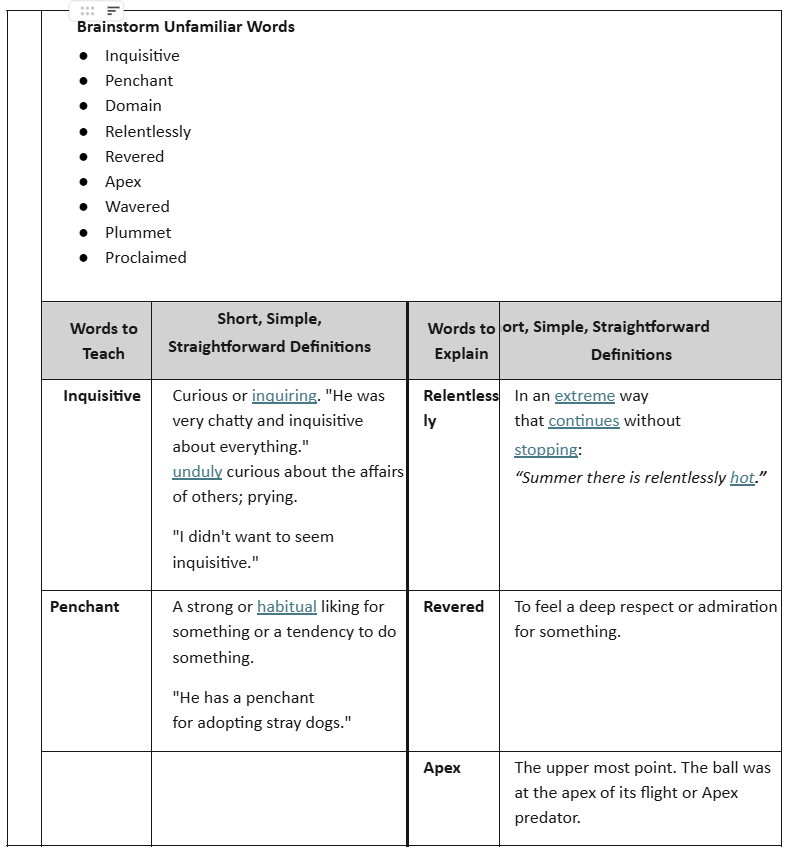
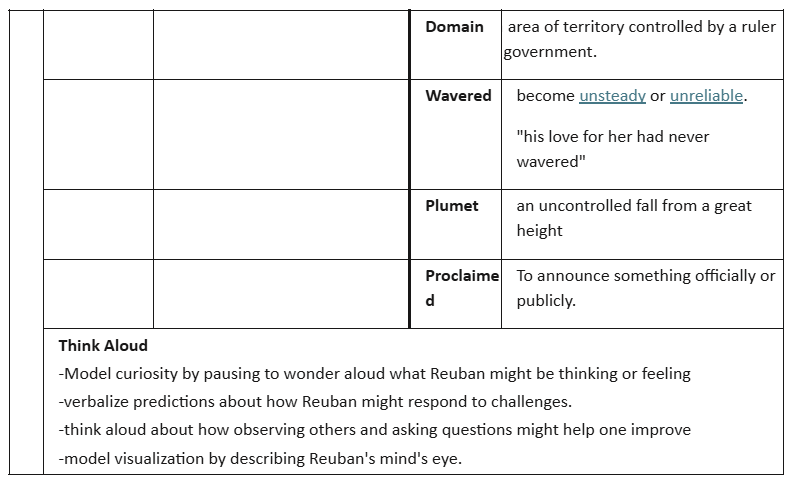
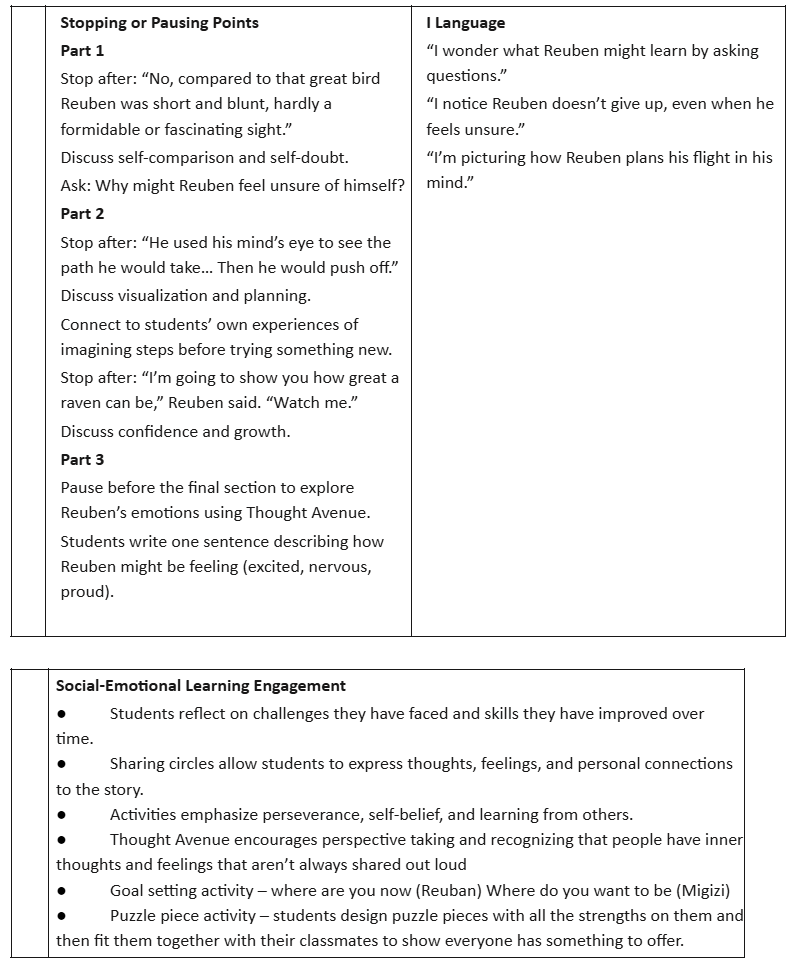
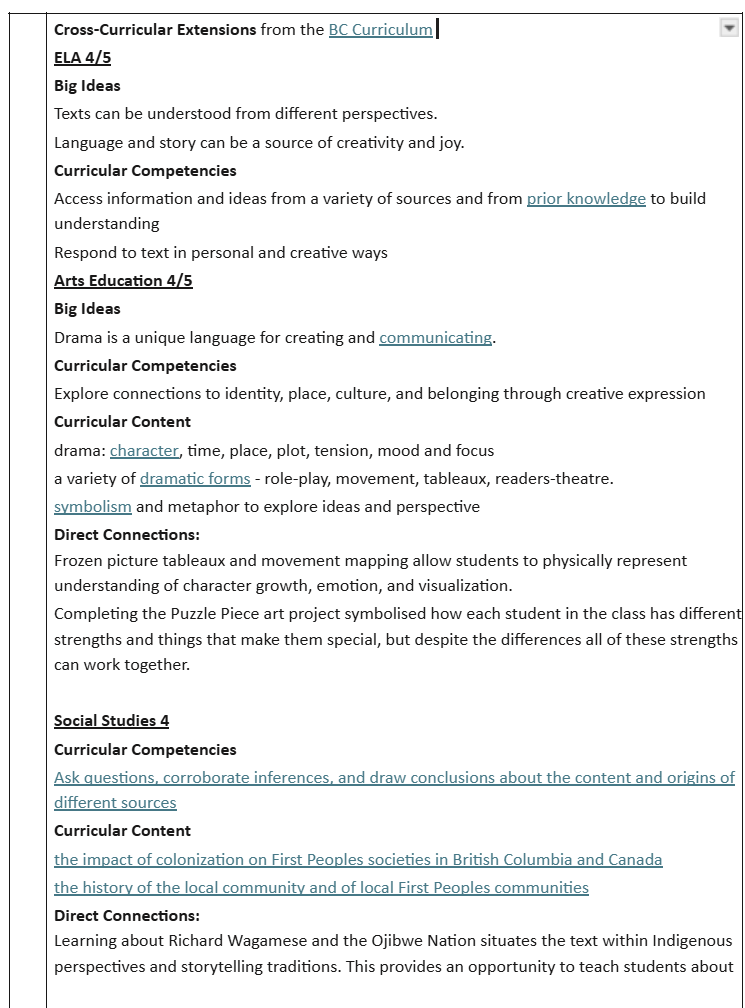
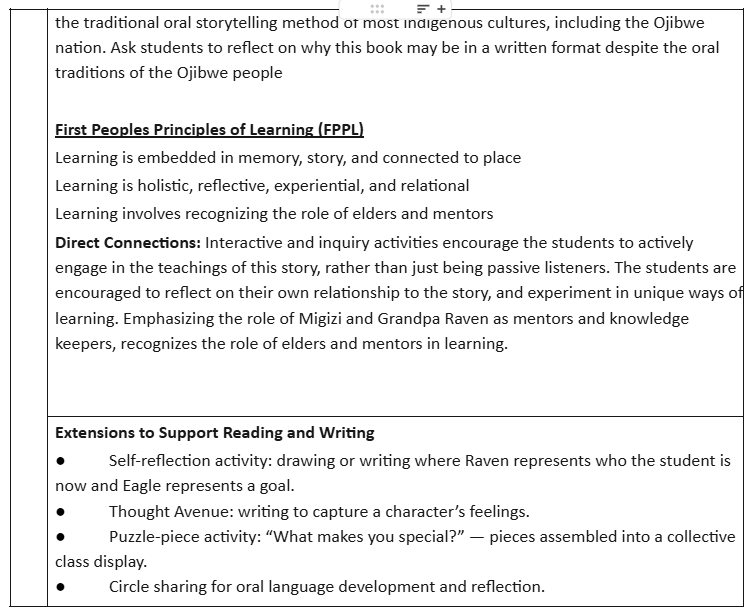
Act I, II, III, and scene…
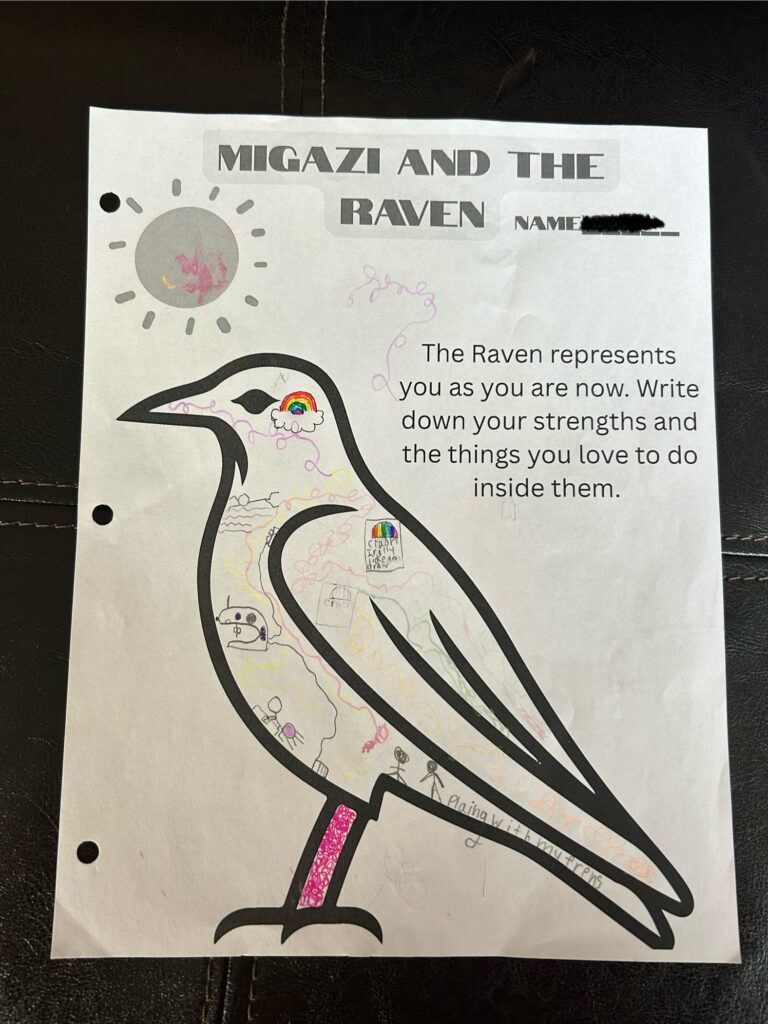
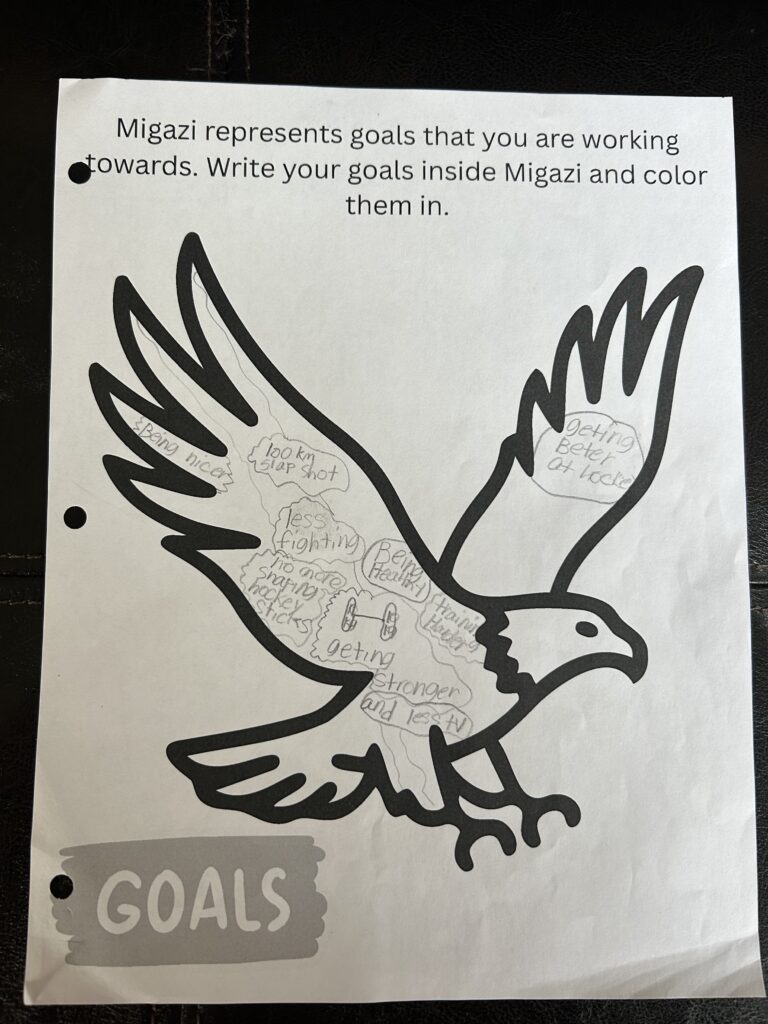
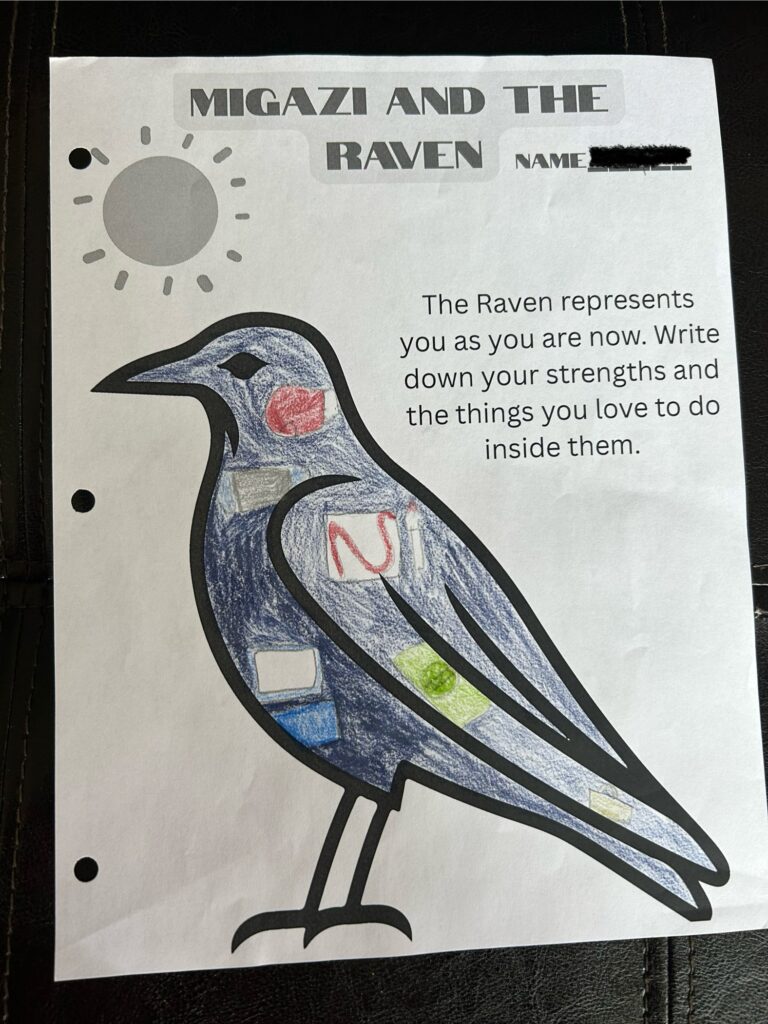
In Session One, students explored the meaning of “inquisitive” through think-pair-share and role-play questioning activities. They reflected on mentors in their own lives, connecting to Migizi and Grandpa Raven. Our main activity invited students to create a write-draw mind map, using Reuben to represent their current strengths and Migizi to represent their goals. I think offering flexible response helped keep the students engaged and eager to complete this task. We also included a sharing circle at the end for students to reflect on what the story helped them learn as well as our authentic way of acknowledging Indigenous pedagogy and the First Peoples Principles of Learning: learning is relational and embedded in story.
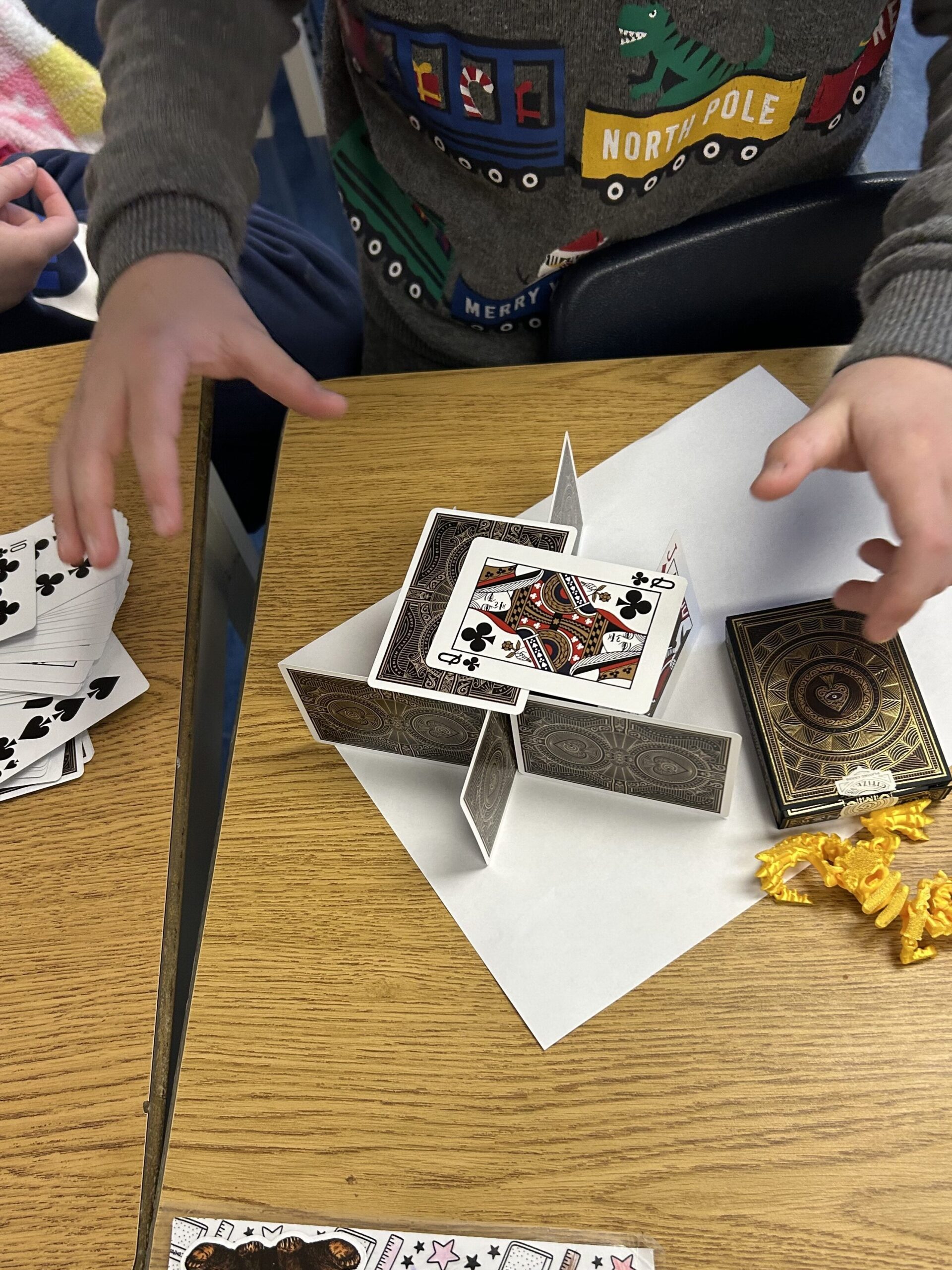
Session Two began with a questioning game to reconnect students to Reuben’s inquisitive nature. Movement mapping and frozen tableaux followed, allowing students to embody visualization and growth. The drama-based activities were particularly engaging and highlighted how differently students interpreted Reuben’s uncertainty and confidence.
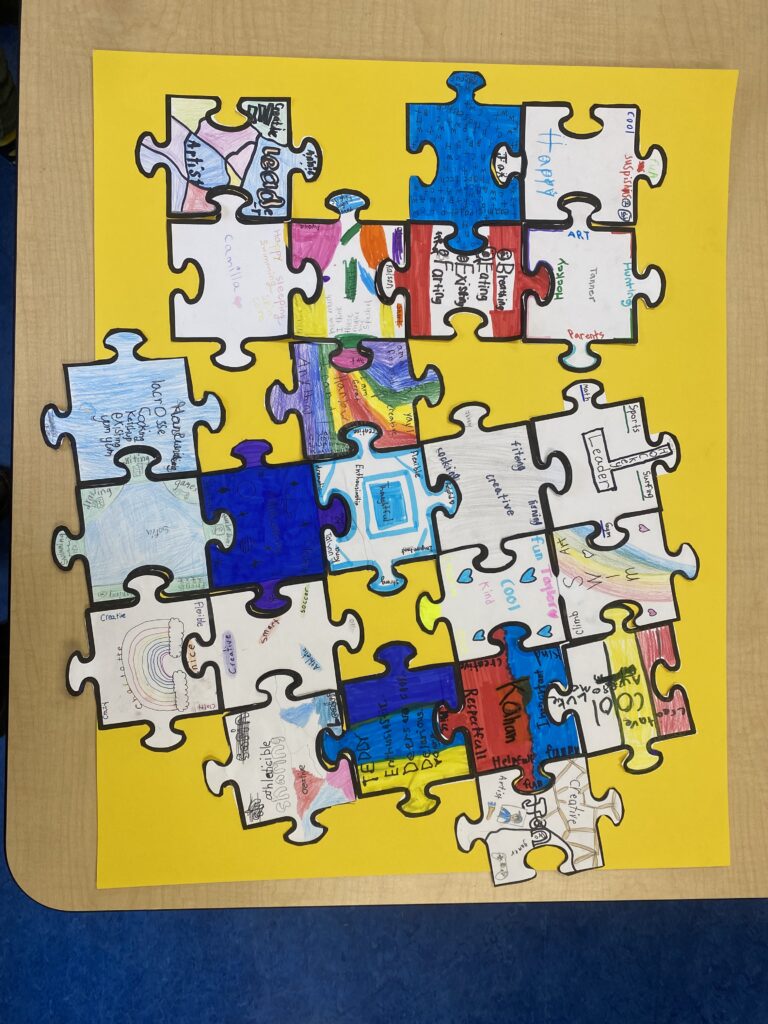
In Session Three, students wrote from Reuben’s perspective using “Thought Avenue.” Engagement was lower during this activity and this prompted me to reflect on whether additional modeling or structure was needed, or if the students weren’t as interested in this activity. Their teacher mentioned it was a weird day in the classroom, but I also wondered if this was a sign the students were becoming more comfortable with us and testing how far they could push. However, the energy returned during the final combo write/draw activity which went very well in the first session. In this activity I noticed a strong demonstration of the Big Idea “Exploring stories helps us understand ourselves and make connections to others and to the world”. Each student created an individual puzzle-piece to represent their strengths and classroom identity which were assembled into a collective classroom display representing each learner’s valuable contribution to their classroom community. This activity reinforced that despite our differences, we all have something valuable to offer to our class, community and the world.
Final Thoughts
This experience reminded me that read-alouds are not simply instructional routines; they are opportunities to intentionally design spaces where students see themselves reflected in text and in one another. The most meaningful moments were not tied to vocabulary or comprehension, but instead to the conversations, risks, and connections students made.
I was particularly aware of how engagement shifted depending on the format of response. Drama and collaborative art invited confidence and perspective-taking, while written reflection required more scaffolding. Moving forward, I would integrate clearer modeling and gradual release when transitioning to written tasks to ensure students feel as supported in these activities as possible.
Ultimately, this experience made me appreciate that, read-alouds can make stories become more than texts to analyze. They transform stories into invitation for students to reflect on who they are how they will grow into who they want to become.
Sources
Ness, M. (2024). Read alouds for all learners. Solution Tree Press. British Columbia Ministry of Education and Child Care. (n.d.). BC curriculum. https://curriculum.gov.bc.ca/