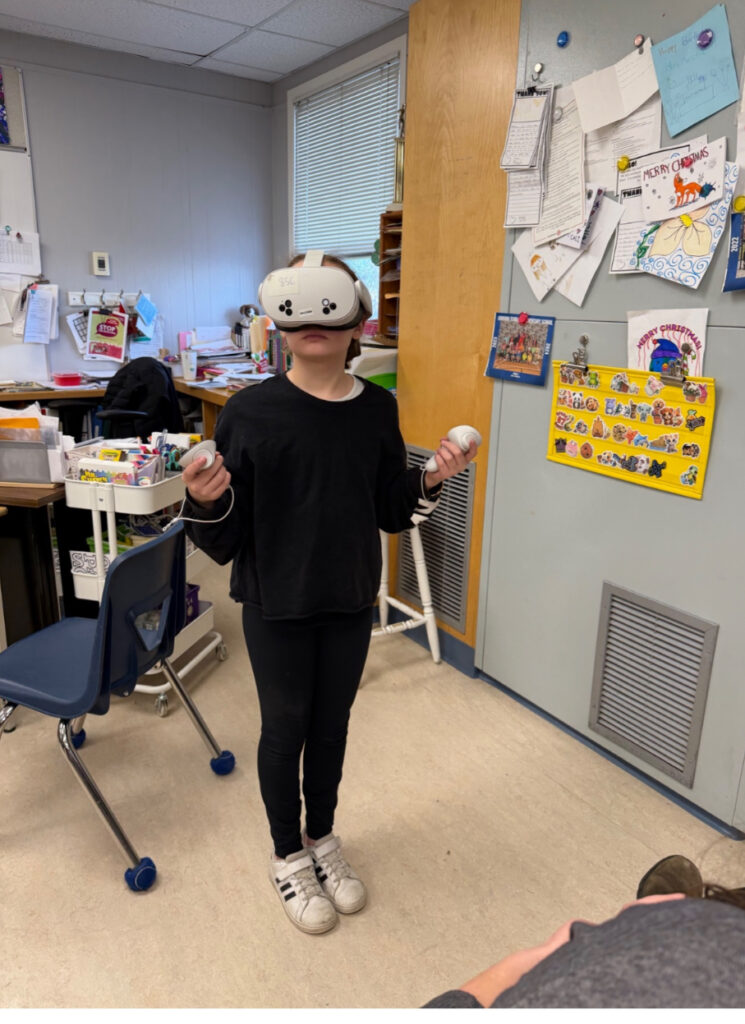
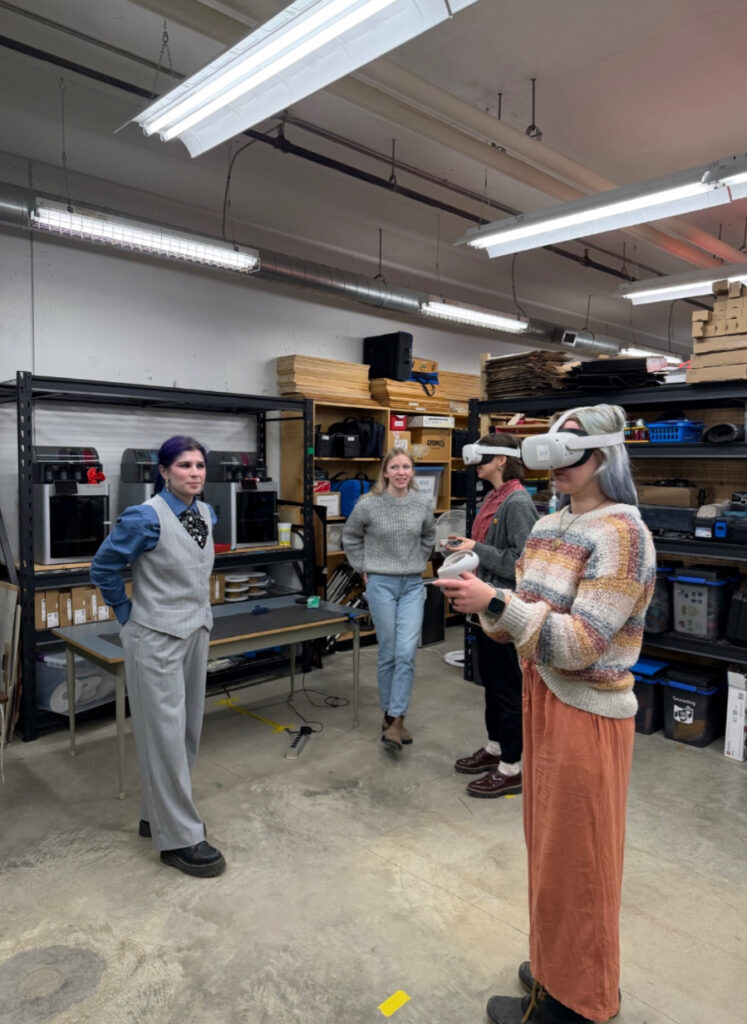
For this blog post, I would like to reflect on the VR experience my peers and I shared while working in an elementary classroom. I began my first experience with VRs at the design lab, and it was quite intimidating but also very fascinating. We began with an Introduction to the story we would be working with, Wolves in the Walls by Neil Gaiman, and then learned our way around the VR headsets. My partner did not enjoy the VR experience, and so I was lucky enough to experience the full story. It was incredible how the VRs transported us to another world, much like a story does. However, this experience left me with many questions. How would students react to this experience? How is the rise in technology, such as VR, impacting children’s imagination? Does this enhance a student’s experience with literacy or perhaps inhibit it?
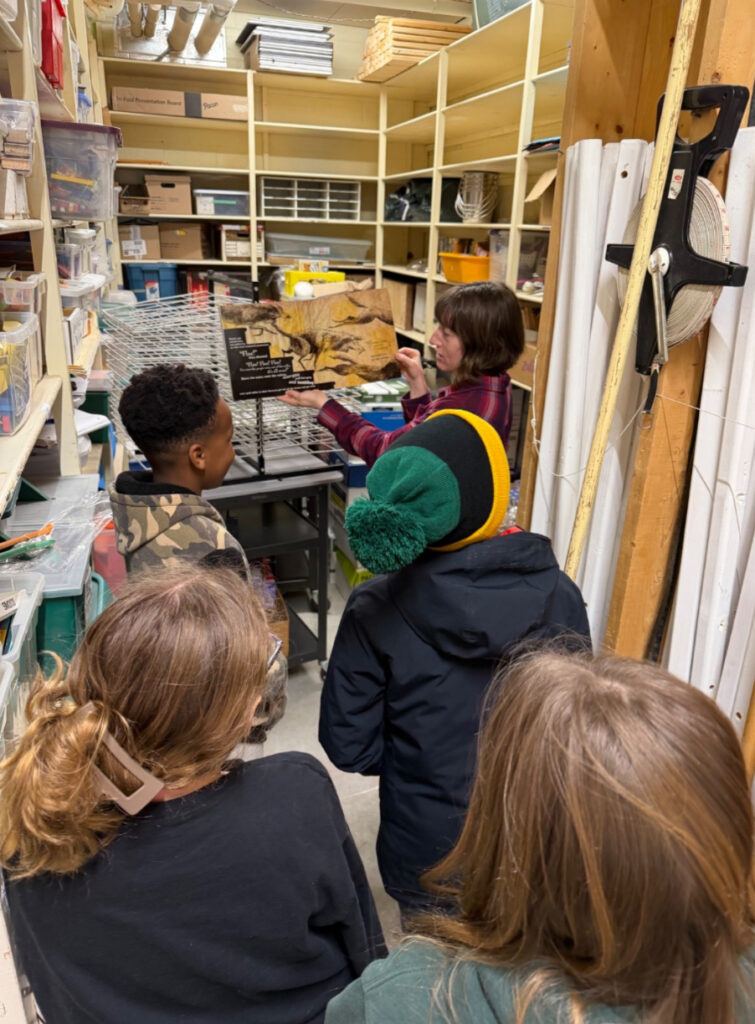
The next day, we tested out our new VR knowledge with the elementary students. We began by reading the book in different sections throughout various places in the school. Then, the students were given a work booklet to complete while they waited for their turn with the VR headsets. As I suspected, they were all very excited. It appears that students without headsets had a hard time focusing on the assigned work, and few booklets were completed. For the students using the headsets, it was almost sinister the way the VR nearly sedated them. The students appeared to be in a trance-like state, and I found it shockingly hard to grab their attention while they were using the VR.
At the end of this experience, I am not sure if I would use VR in my own classroom. In this activity, it seemed to have inhibited students from in-depth literacy learning rather than enhanced it. I’m not sure what English Language Arts curricular Big Idea this connects to, but it could be argued that it fits in with “Using language in creative and playful ways helps
us understand how language works.” I do think VR could be useful in other scenarios, however, such as virtual field trips or virtual travel to another country for social studies. I am still not sure how the VR experience may have impacted the student’s imagination, as it was just one short experience. I am curious to do more research on this topic and see what I find.