What are Story Vines
Story vines are an all-around inclusive literary device that can highlight the key events of any story. Story vines are often misrepresented as an indigenous North American practice. Although this is not the case, they have been commonly used to bring indigenous learning into the classroom because of their close fit with oral tradition (McGurry, 2019). Though it is hard to trace the exact origins of this tradition, it has been linked to West African traditions (Manuela and Cuesta).
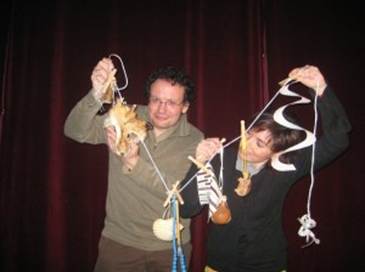
One thing that makes these story vines so inclusive is the ability to tell any story, to anyone, in any language. We can all interpret the story of pictures. The practice began by weaving colourful fabrics together to represent different parts of a story (Manitoba Ed.) and has since evolved by adding pictures and trinkets to make the story even more vivid.
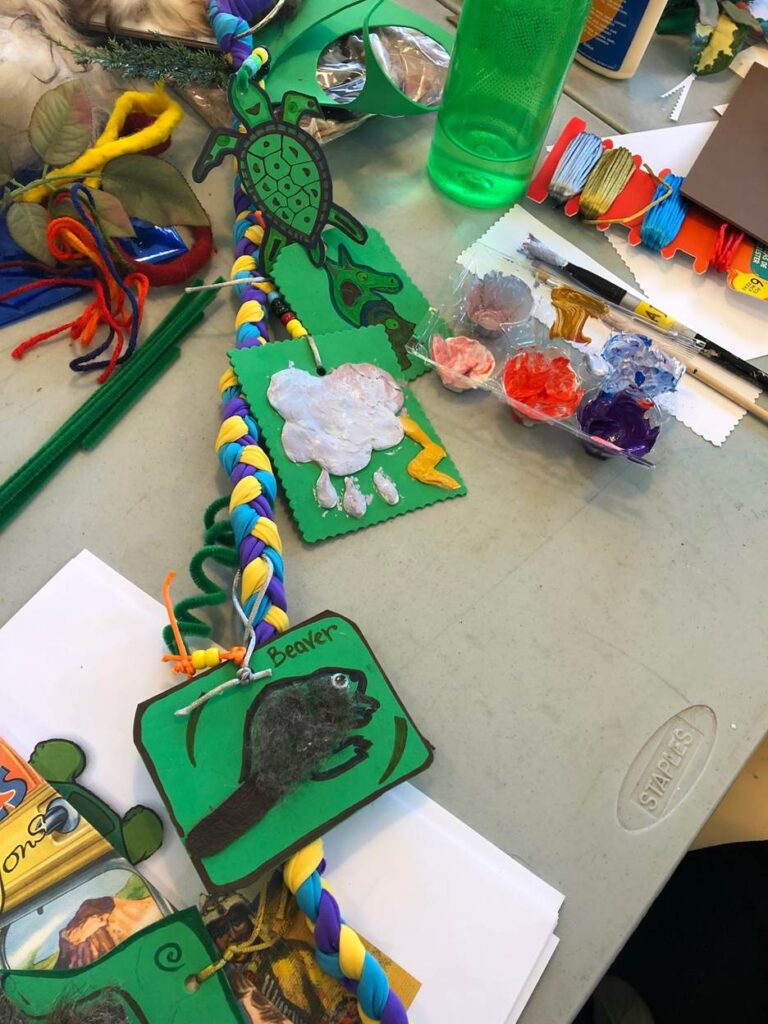
Day 1
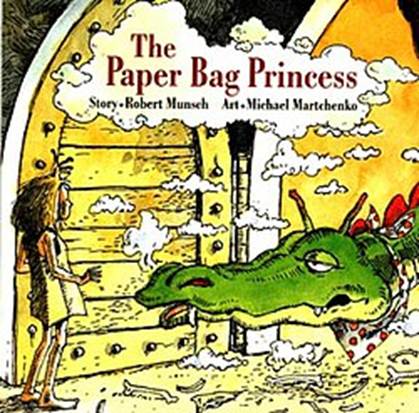
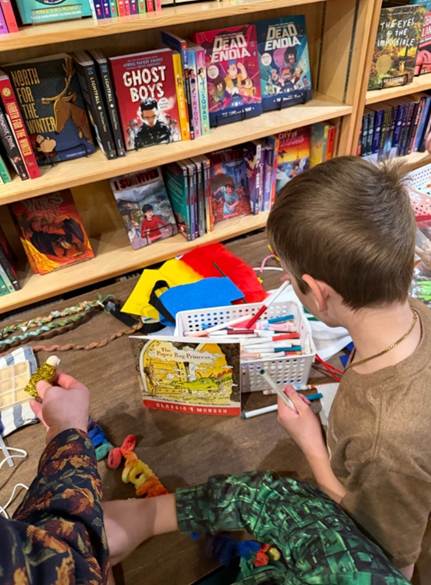
For our use of story vines, we read Robert Munsch’s The Paper Bag Princess to a group of grade 2 students. Before this reading, our teacher candidates created their own story vines as a visual example.
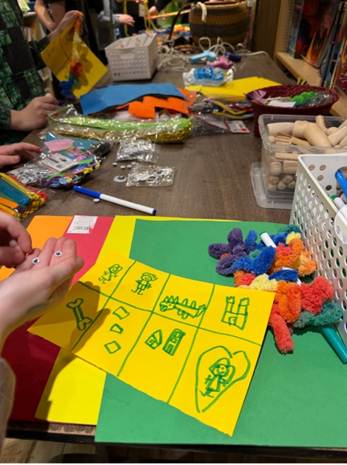
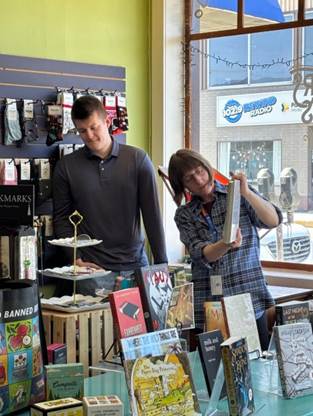
The students were then challenged to summarize the key points of this story with pictures. Then, the students got to create their own story vines using a plethora of materials. This was a strong community-building activity, as the students collaborated to generate ideas, sought help from their UVic big buddies, and worked in a local bookstore.
Day 2
To further the community-building experience of this activity, the grade 2 students were given the opportunity to share their story vines with the kindergarten classes in their school. For this portion of the experience, my in-situ time looked a little different. I had the most incredible experience working with two grade 2 students (the kindergartens were not available when I completed the in situ). To begin, I read them the Paper Bag Princess one more time to make sure the events were fresh in their minds. Then, each student shared their story vine with me. During their retell, I aimed to provide specific, direct feedback. Instead of “I like it,” I might say “Wow, the big knocker is a neat idea! I can tell that part of the story really stood out to you”. After each student told me about their story vine and I provided some feedback, I asked the students if any part of each other’s vine gave them a new idea about the story. They both exploded with responses, and at the end, one student said: “Yeah, it’s like you can both be looking at the same story, but you both see it just a little bit different. That’s kinda cool!” This connection made by the student really brought out the Grade 2 big idea: Through listening and speaking, we connect with others and share our world. All in all, this was a very wholesome experience, and I am very grateful I got the opportunity to share in those learning moments with those kiddos!
Sources
https://www.cbc.ca/news/canada/manitoba/story-vines-winnipeg-1.5040107
https://joseandhelenastorytellers.wordpress.com/the-story-vine/