What does it mean to be ‘effective’?
To be effective means achieving intended goals or results. It is important to consider this when setting goals and reflecting on whether or not they are achievable.
What characteristics does an effective teacher have?
In teaching, an effective educator embodies a firm but fair approach, balancing kindness and firmness. This balance is shown by:
- Setting clear expectations
- Maintaining consistency through routine
- Using positive reinforcement that balances teacher authority with student-centred kindness (Vietnam Teaching Jobs 2024) is key. Beyond this approach, effective teaching also requires clear communication and the creation of space for student growth.
In addition to a firm but fair approach, an effective teacher must convey information and ideas to their students. However, it is also important that students are provided space and freedom to explore and develop their own ideas.

What kind of teacher do I want to become?
I aim to be a firm but fair teacher, balancing flexibility and consistency within a structured classroom. I am passionate about teaching and want to inspire this passion in my students.
What do I need to learn to become an effective teacher?
To reach my vision of being an effective teacher, I will reflect on my pedagogy and its outcomes, adjusting as needed to achieve the best results for my students.
What are my beliefs about teaching (my teaching philosophy)?
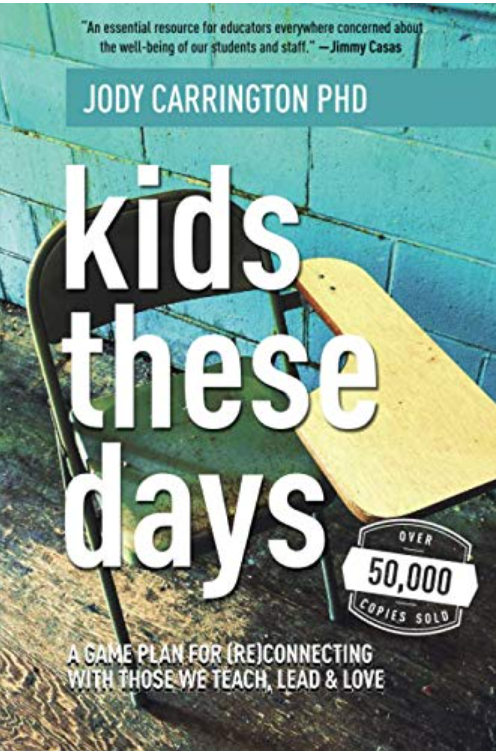
My teaching philosophy is deeply rooted in the holistic approach of whole child teaching. I truly believe Carrington’s insight that children can’t learn anything else when they are dysregulated (Carrington, 2020). I always strive to make sure my students feel safe and comfortable before learning. I also believe in pushing past comfort zones and helping kids to challenge themselves.
What is a worldview?
A person’s worldview is built through experience and prior knowledge. As a teacher, you are responsible for contributing to your students’ worldviews while also acknowledging the worldviews they bring to your classroom.
How would you describe your worldview?
I believe my worldview comes from a place of open mindedness. I naturally try to consider the other side of a situation and am constantly analyse my worldview against others’ perspectives.
While thinking about your own worldview, also consider the impacts of your ethnocultural, socioeconomic, geopolitical and spiritual identities.
I do believe I have a Western-centred outlook due to being raised in a Western-centric society. Coming from a privileged family, I need to be aware when my bias pushes me to look at a situation from that perspective. Another bias that tends to cause my barriers to go up is the topic of religion. Growing up in an atheist household, I tend to be very cautious around the topic of religion. This is a weakness I am working to improve.
Why, as a teacher, is it important to be aware of your own worldview, as well as those of your students and school community?
As a teacher, I try to be aware of my worldview and the worldviews of others in a number of ways. I try to avoid statements such as “Why don’t they just…” or “they could easily do…” and replace such phrases with “I wonder what could help them to…” or “I wonder what’s preventing [desired outcome]”. I try to challenge not just the Western worldview but all worldviews that may cause people to become narrow-minded or to view situations through tunnel vision.
What can you do, as a teacher, to ensure that your worldview does not impede the success of the diversity of learners in your classroom?
When working with a diverse group of students (or any group of students for that matter), it is essential for teachers to be aware of their own worldview so as not to impose these perspectives on their students.
It is crucial that our students’ worldviews are respected; however, it is also important that teachers contribute to developing these worldviews while allowing their students the space to create their own. Teachers should challenge worldviews that inhibit the preconceived perspectives of their students, but also those that limit them from expanding their perspectives.
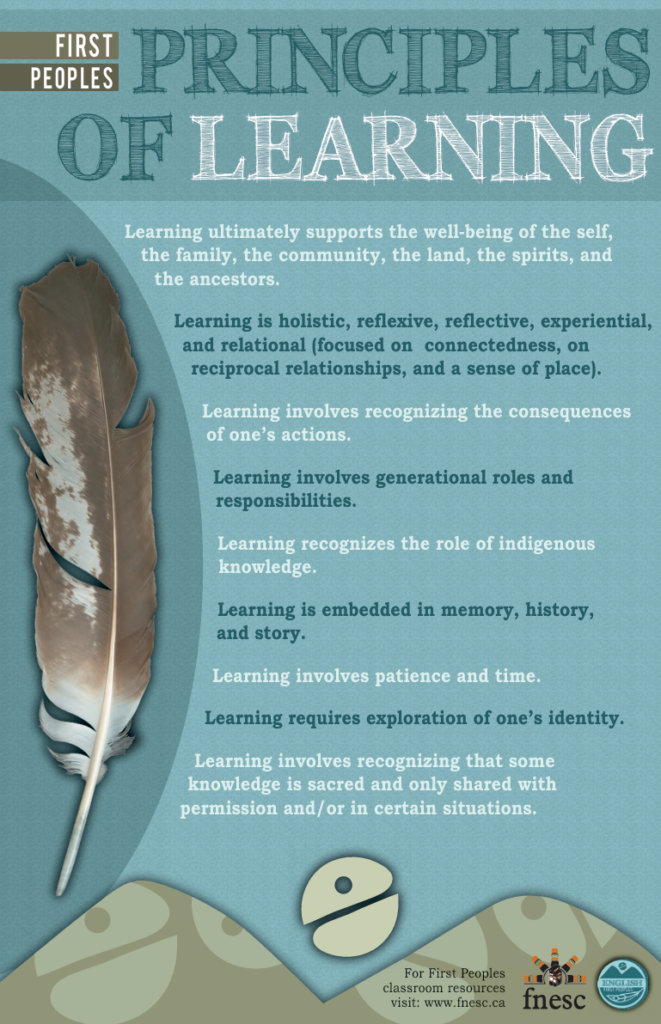
I believe the BC curriculum does a good job of challenging the Western worldview by incorporating First Peoples’ learning into the content and through First Peoples Principles of Learning. I believe the curriculum still reinforces a Western worldview through its emphasis on linear learning and its lack of focus on mastery of topics.

References:
Vietnam Teaching Jobs https://vietnamteachingjobs.com/blog/how-to-be-kind-but-firm-as-a-teacher/
Carrington, J. (2020). Kids these days. A game plan for (re)connecting with those we teach, lead, & love. Impress, LP.
University of Victoria. (n.d.). Teacher education competencies. https://onlineacademiccommunity.uvic.ca/teachered/competencies-12/